About Uttar Pradesh Wildlife
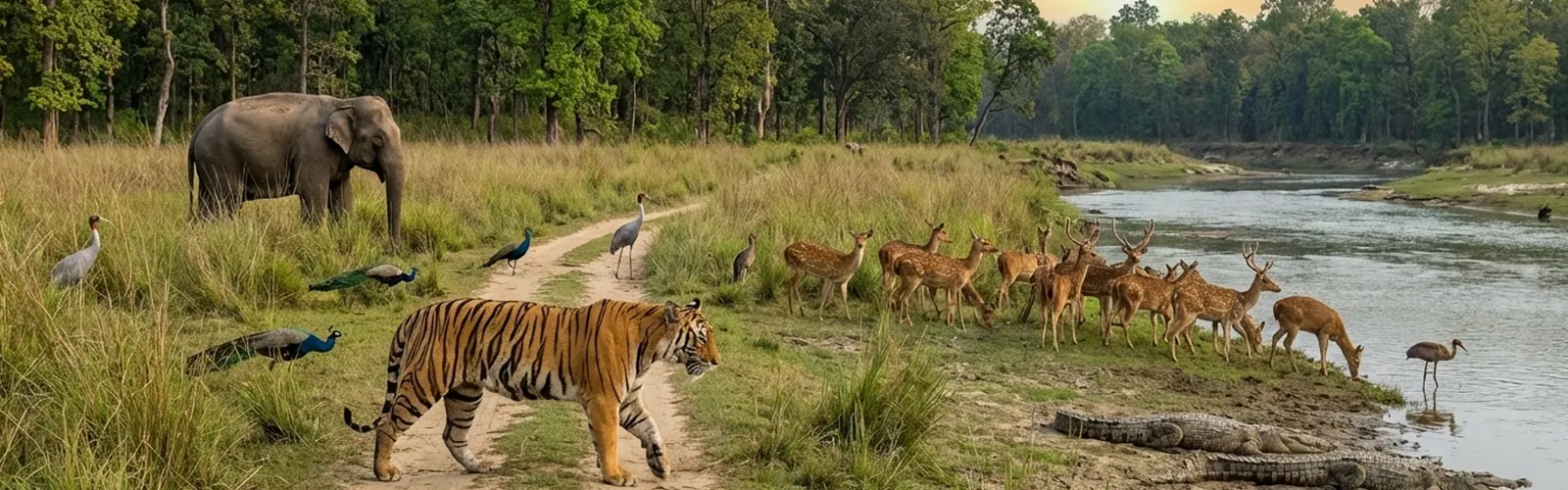
Uttar Pradesh offers diverse wildlife experiences at Dudhwa National Park, the state's only national park, known for its tiger reserve which also includes the Kishanpur and Katarniaghat Wildlife Sanctuaries. The National Chambal Sanctuary presents a stunning riverine ecosystem, home to the critically endangered gharial, the Gangetic dolphin, and numerous migratory birds. Another major highlight is the Hastinapur Wildlife Sanctuary, one of the largest in the state, known especially for its rich avifauna and varied habitats.
“Book your wildlife tour today and get ready for an unforgettable jungle adventure!”
Attractions in Uttar Pradesh Wildlife
Uttar Pradesh is home to diverse wildlife attractions, including its sole National Park and numerous wildlife and bird sanctuaries that form vital tiger reserves and natural habitats for endangered species. Below are comprehensive details on key wildlife destinations.
Dudhwa National Park
Dudhwa National Park, located in the Terai region along the Indo-Nepal border, is part of the Dudhwa Tiger Reserve along with the Kishanpur and Katarniaghat Wildlife Sanctuaries. Known for its expansive grasslands, dense forests, and wetlands, it is a major habitat for the barasingha and one of the few places where tigers and rhinoceroses can be seen together.
The park is open from November to April and remains closed during the monsoon (July–October). Entry fees are ₹100 for Indian visitors and ₹600 for foreigners.
National Chambal Sanctuary
This tri-state protected area (Uttar Pradesh, Madhya Pradesh, and Rajasthan) runs along the clean waters of the Chambal River. It features a unique riverine ecosystem and arid-zone flora.
The primary conservation area for the critically endangered Gharial (a fish-eating crocodile) and the endangered Ganges River dolphin, the rare, red-crowned roof turtle and large numbers of Indian skimmers. The winter months, from November to March, are ideal for spotting aquatic wildlife and migratory birds.
Pilibhit Tiger Reserve
Situated in the Terai region along the Indo-Nepal border, this reserve is characterized by dense sal forests, tall grasslands, and swamps with significant tiger population and rich biodiversity, including swamp deer, leopards, and a wide variety of bird species. It won the TX2 International Award in 2020 for doubling its tiger population in a short period. November to April.
(Nawabganj Bird Sanctuary) Shaheed Chandra Shekhar Azad Bird Sanctuary
A shallow marshland and one of Northern India's many wetlands, located on the Kanpur-Lucknow highway in the Unnao district. It has been renamed the Shaheed Chandra Shekhar Azad Bird Sanctuary. A haven for birdwatchers, providing a wintering ground for over 250 species of resident and migratory birds from regions like Siberia and Europe. It also features a deer park. The peak season for migratory bird sightings is from November to March.
Best Time to Visit Uttar Pradesh Wildlife
The best time to visit Uttar Pradesh wildlife sanctuaries is from November to March due to pleasant weather and better animal sightings, including migratory birds. Key nearby places include the major wildlife sanctuaries like Dudhwa, Kaimoor, and Chandra Prabha, as well as historical and cultural destinations such as Agra, Varanasi, and Ayodhya. For a specific wildlife focus, the months of February and March offer the best chances for spotting animals.
Season-wise suggestions
Winter (November to March) is the ideal season for wildlife tourism.
Pleasant temperatures ranging from (8-24) °C, with evenings and nights getting cooler, sometimes as low as 4°C in December and January°C, many sanctuaries are open, and it's the peak season for sighting animals and birdwatching as they are more active in the cooler climate.
Summer (April to June): This is the hottest time of year, with temperatures often exceeding
40°C, extremely hot and dry, making daytime excursions uncomfortable, animal sightings are less frequent.
Monsoon (July to September): This is the off-season for wildlife tourism due to heavy rainfall.
Heavy rains, humid, and can be a difficult time for travel. Many sanctuaries might be closed or have limited accessibility. However, this period can be a great time for visiting other parts of Uttar Pradesh for a more off-beat experience, such as visiting the Taj Mahal or religious sites in Varanasi and Ayodhya. Time-wise suggestions for wildlife sanctuaries
Best time for animal sightings: Late winter (February to March) is the best time for wildlife sightings in many sanctuaries, as animals tend to come out more actively in the cooler weather.
Best time for birdwatching: November to January is ideal for seeing migratory birds at sanctuaries like Chandra Prabha Wildlife Sanctuary.
Daily schedule: The best time for safaris is in the early morning and late afternoon, when animals are most active. The midday heat can be intense, so it’s best to avoid safaris during this period.
Activities in Uttar Pradesh Wildlife
Uttar Pradesh wildlife activities include Wildlife Jeep Safaris, Bird Watching, Nature Walks & Forest Trails in many sanctuaries, Visitors can enjoy Boat Rides & River Safaris, go on Jungle Tours & Eco-Tours, and learn about local culture. Specific attractions include spotting gharials and dolphins at the Hastinapur Wildlife Sanctuary.
Activities
- Wildlife Safaris: Go on guided safaris to see various animals in their natural habitat.
- Bird Watching: Visit bird sanctuaries, such as Nawabganj Bird Sanctuary, to see diverse bird species.
- Boating and River Tours: Take motorized boat trips on the Chambal River to spot gharials and dolphins.
- Nature walks and Jungle Trip: Explore the dense forests and lush landscapes on guided walks.
- Photography: Capture images of wildlife and scenic views, with options for dedicated photography tours.
- Cultural Experiences: Learn about the local Tharu culture at some wildlife sanctuaries.
Where to go
- Dudhwa National Park: A major wildlife area known for its diverse species, including the Barasingha (state animal).
- National Chambal Sanctuary: A riverine sanctuary that is home to a large population of gharials, Gangetic dolphins, and various turtle species.
- Katarniya Ghat Wildlife Sanctuary: Offers a variety of activities like safaris, boating, and cultural experiences.
- Hastinapur Wildlife Sanctuary: The largest sanctuary in Uttar Pradesh, it is a great place for wildlife and nature enthusiasts.
- Chandra Prabha Wildlife Sanctuary: Another important sanctuary to explore in the state.
How to Reach Uttar Pradesh Wildlife
There are 25 Wildlife Sanctuaries is in Uttar Pradesh, India.
Uttar Pradesh’s only National Park: Dudhwa National Park, also includes the Kishanpur and Katarniaghat Wildlife Sanctuaries and is part of the Dudhwa Tiger Reserve.
The primary hubs are Lucknow, Bareilly, and Gorakhpur, depending on your route.
From these cities, you can travel to the park by road or train, with the nearest railway station being Dudhwa or Palia. Alternatively, for the northern sanctuaries like Sohagi Barwa, Gorakhpur is the best starting point by both air and rail.
FAQs :