
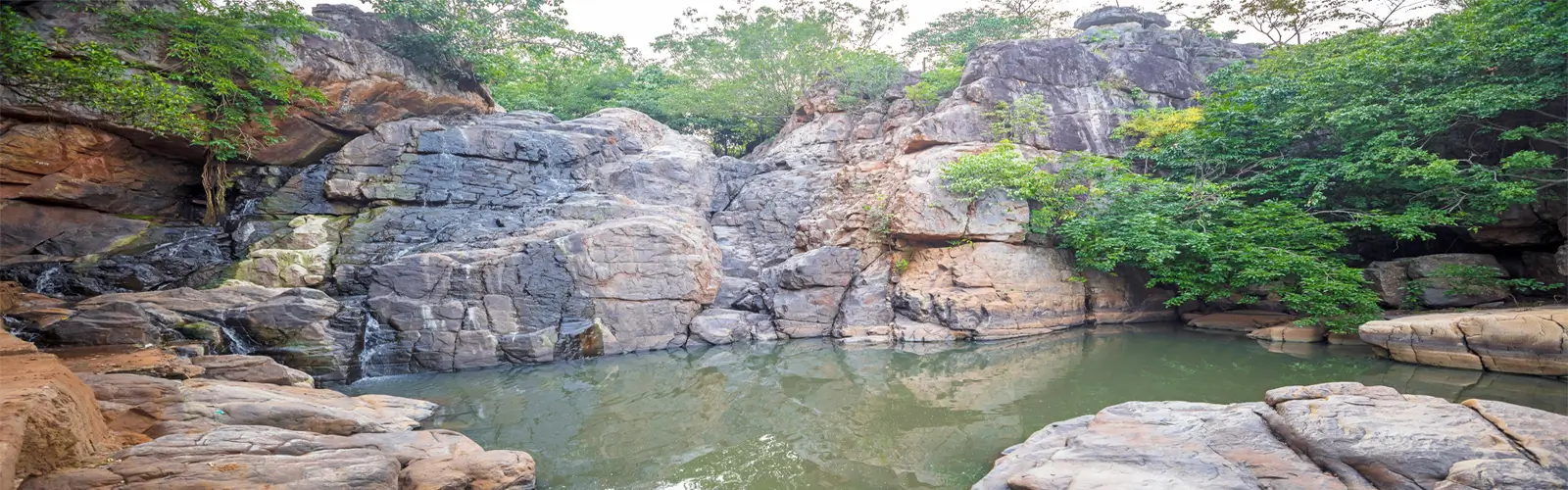
About Gonasika Cave
Hidden in the lush landscapes of the Keonjhar hills, the Gonasika Cave, also known as the Baitarani Cave, holds great significance on both natural and spiritual levels. This is because the Baitarani River is said to originate from the head of a cow-shaped rock inside the cave, hence the name "Gonasika," literally meaning "cow's nose."
Gonasika blends faith and nature, surrounded by dense forests and tranquil hills. For centuries, it has served as a sacred pilgrimage site and a quiet place for eco-tourism. Today, it shows Odisha's natural beauty, drawing both devotees and adventure tourists.
Plan your next adventure to Gonasika Cave and experience its mythological and geological wonders first-hand. Let its untouched beauty, rich with stories and natural marvels, inspire your journey beyond the ordinary.
Top Attractions in Gonasika Cave
Exploring top attractions in Gonasika Cave reveals not just the cave itself but also several nearby attractions that complete the journey. From scenic hilltops to waterfalls and temples, here are the top attractions in and around Gonasika Cave:
Baitarani River Origin Point
In the Gonasika Cave is located a holy source of the River Baitarani, one of Odisha's major rivers. Emerging from the nostrils of a stone cow’s head, the stream flows through the cave’s rocky bed before disappearing underground and resurfacing later.
- Famous For: Sacred origin of Baitarani River
- Best Time to Visit: Post-monsoon (October–February)
- Entry Fee: Free
Brahmeswara Temple
Located near the cave, the Brahmeswara Temple is a revered site dedicated to Lord Shiva. It is here that hundreds of devotees come during Mahashivaratri.
- Famous For: Lord Shiva worship and mythological relevance
- Best Time to Visit: February–March (Shivaratri)
- Entry Fee: Free
Gonasika Hills Viewpoint
From the top of Gonasika Hills, one can see dense forests, meandering rivers, and far-flung villages in their midst. This is an ideal place for photography and meditation.
- Famous For: Panoramic views and sunrise photography
- Best Time to Visit: Early morning or evening
- Entry Fee: Free
Sanaghagara Waterfall
Located just about 30 km from Gonasika, Sanaghagara Waterfall is one of the most popular waterfalls in Odisha. It attracts many tourists because of its crystal-clear waters and surrounding picnic areas.
- Famous For: Waterfall, nature photography, and family picnics
- Best Time to Visit: August to February
- Entry Fee: Rs20 per person
Keonjhar Town
The nearest urban centre, Keonjhar, is worth exploring for its ancient temples, tribal markets, and regional cuisine. The Baladevjew Temple and Keonjhar Palace rank among the topmost attractions.
- Famous For: Historical sites and cultural experiences
- Best Time to Visit: Year-round
- Entry Fee: Free
Each of these destinations enhances the charm of Gonasika Cave tourism, offering visitors a perfect blend of adventure, spirituality, and natural beauty. Discover the best places to visit in Gonasika Cave to experience the true essence of this serene and mystical destination.
Activities in Gonasika Cave
A visit to Gonasika Cave is more than sightseeing-it's an experience that blends spirituality, adventure, and nature in equal measure. From exploring the sacred cave to trekking through the surrounding forests, each activity adds a new layer of discovery to your Gonasika Cave tourism journey.
Cave Exploration
The highlight of every Gonasika Cave travel guide, the cave exploration lets one witness the holy origin of the River Baitarani, flowing through a cow-shaped rock formation. The serene underground atmosphere gives a mystical vibe that attracts pilgrims and adventurers alike.
- Famous For: Origin of Baitarani River and sacred rock formation
- Best Time to Visit: October to February
- Entry Fee: Free
Nature Trekking
Gonasika’s lush hills and dense sal forests present gentle nature treks perfect for nature enthusiasts. The trek rewards one with panoramic views, native flora, and the refreshing sounds of chirping birds and flowing streams.
- Famous For: Scenic trails and natural beauty
- Best Time to Visit: Winter and early summer
- Entry Fee: Free
Photography and Birdwatching
The natural beauty of this place makes Gonasika a photographer's dreamland. The area is home to various species of birds, butterflies, and small mammals, offering endless photo opportunities.
- Famous For: Wildlife photography and peaceful environment
- Best Time to Visit: Morning hours, October to March
- Entry Fee: Free
Religious Pilgrimage
For devotees, Gonasika Cave holds deep religious importance. Offering prayers at the cave’s river source is believed to purify the soul and bring spiritual peace. The site also attracts pilgrims during festivals and auspicious days.
- Famous For: Spiritual significance and holy rituals
- Best Time to Visit: February–March (Mahashivaratri)
- Entry Fee: Free
Picnicking and Local Exploration
Gonasika’s tranquil surroundings and fresh air make it perfect for day picnics. Visitors can also explore nearby tribal villages to experience local traditions, crafts, and cuisine that reflect Odisha’s rich cultural heritage.
- Famous For: Peaceful ambiance and tribal culture
- Best Time to Visit: October to February
- Entry Fee: Free
Each of these activities ensures your Gonasika Cave tourism experience is both spiritually uplifting and naturally enriching, making it one of Odisha’s most memorable destinations.
Best Time to Visit Gonasika Cave
Gonasika Cave offers the best visiting time between October and February, when the weather is cool and pleasant, an ideal time for exploration.
- Peak Season (Oct–Feb): Mild temperatures (18–25°C), perfect for sightseeing and trekking.
- Shoulder Season (Mar–May): Warm but manageable; good for less-crowded visits.
- Off-Season (Jun–Sep): Heavy rainfall makes traveling tricky, yet it enhances the region's lush greenery.
Festival Tip: Plan your visit during Mahashivaratri for a spiritual experience and vibrant local celebrations.
Travel Tip: Carry light woollens during winter and comfortable shoes for cave exploration.
How to Reach Gonasika Cave
By Air:
The nearest airport is Bhubaneswar Airport (220 km), well-connected with major Indian cities.
By Train:
The nearest railway station is Keonjhar Railway Station, around 45 km away.
By Road:
Gonasika is accessible via state highways from Keonjhar. Regular buses and private taxis are available for travelers.
Travelers booking a Gonasika Cave travel package can expect guided transfers and comfortable accommodations arranged through Odisha’s leading tour operators.