
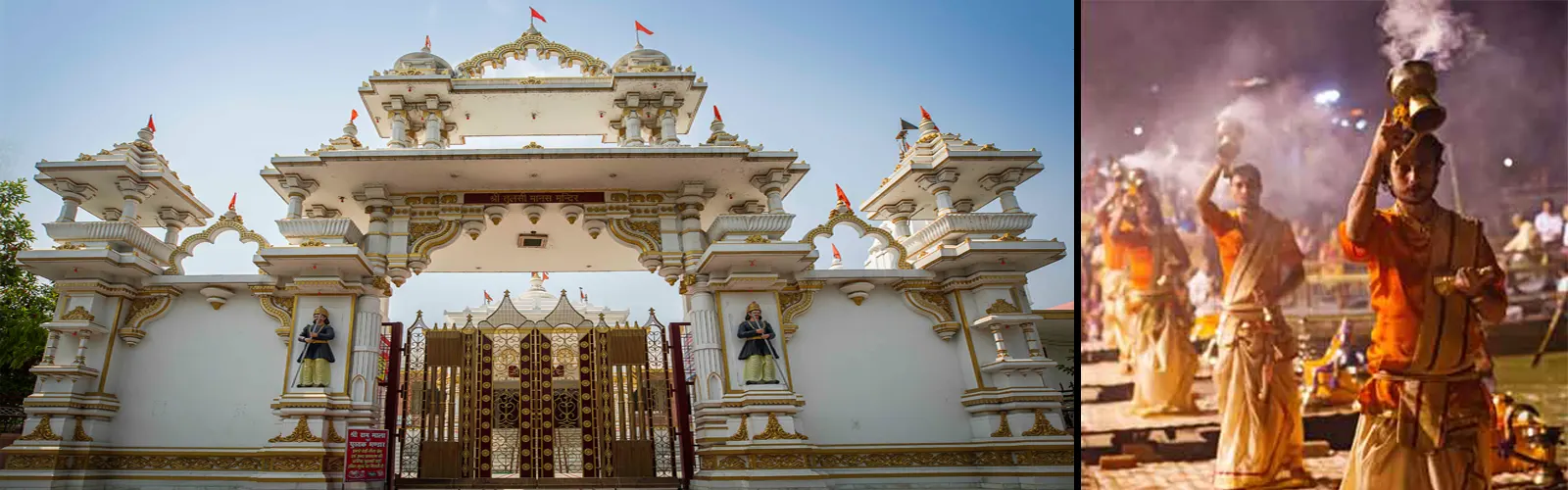
About Tulsi Manas Temple
The Tulsi Manas Temple, a pristine white marble marvel built in 1964 by the Sureka family, is a unique destination for Tulsi Manas Temple tourism and a cornerstone of Hindu literary heritage. Dedicated to Lord Rama, its profound significance stems from its location: the site where the great saint-poet Goswami Tulsidas is believed to have penned the epic Ramcharitmanas. What makes this temple truly special for Tulsi Manas Temple tours and travels is its architecture, which features the entire epic poem—including Chaupayees and Dohas—beautifully inscribed in marble on its walls. This creates an immersive spiritual and educational experience, allowing pilgrims and scholars to literally walk through the story of Lord Rama. The temple’s serene atmosphere and focus on scriptural narrative distinguish it as a significant cultural landmark in Varanasi.
What to Expect?
Visitors stepping into the Tulsi Manas Temple can expect a serene and spiritually uplifting experience that beautifully blends devotion, culture, and artistry—making it a highlight of Tulsi Manas Temple tourism in Varanasi. The temple’s striking white-marble architecture instantly captures attention, with its walls intricately inscribed with verses from the Ramcharitmanas, transforming the entire structure into a living scripture. As you wander through the complex, you’ll encounter detailed murals, diorama-style exhibits, and sculptures depicting key episodes from the Ramayana, offering a vivid and immersive narrative that appeals to both devotees and curious travellers exploring Tulsi Manas Temple tours and travels. The calm atmosphere, accompanied by gentle chanting and the fragrance of incense, creates a peaceful retreat from the bustling streets outside. Small, well-kept gardens with shaded seating provide a quiet place to reflect before exploring further. Inside, dioramas and cultural displays help bring the epic of Lord Rama to life, while idols of Lord Rama, Sita, Lakshman, and Hanuman draw devotees into moments of prayer and introspection. For those planning Tulsi Manas Temple tours and packages during the monsoon months of Saawan, the temple hosts enchanting puppet shows and exhibitions that re-enact the Ramayana through handcrafted puppets—a rare cultural gem and one of the best experiences for families and culture lovers. After taking in the temple’s spiritual and architectural charm, visitors can explore popular places to visit near Tulsi Manas Temple, including the sacred ghats of the Ganga, Kashi Vishwanath Temple, Assi Ghat, and the historic Ramnagar Fort, making the area perfect for travellers seeking meaningful Tulsi Manas Temple travel tips. Overall, a visit here promises tranquillity, cultural richness, and a deep sense of devotion, offering a memorable glimpse into Varanasi’s spiritual heart.
Best Time to Visit
Planning your visit to Varanasi’s serene Tulsi Manas Temple becomes much easier when you understand how the seasons shape the experience. The ideal time to explore this sacred landmark is during the winter months from November to February, when the weather is cool and pleasant, making temple walks, sightseeing, and Tulsi Manas Temple tourism especially comfortable. Temperatures range between 8°C and 20°C, attracting more visitors, so expect moderate crowds. This is also a great period to pair your temple visit with nearby attractions such as Durga Temple, Assi Ghat, or the Kashi Vishwanath Corridor, making it perfect for those exploring Tulsi Manas Temple tours and travels. The shoulder seasons—March to April and October—offer warm but manageable weather. These months are ideal for those who prefer fewer crowds while still enjoying a calm atmosphere. October, in particular, brings festive energy as the city prepares for Navratri, and you can continue exploring other places to visit near Tulsi Manas Temple under pleasant skies. The off-season, from May to June, brings intense heat with temperatures rising above 40°C, but it’s a budget-friendly time, with lighter footfall and better deals on Tulsi Manas Temple tours and packages. The monsoon months from July to September, though humid, come alive with spirituality during the sacred Saawan season. This is when the temple hosts enchanting puppet shows and cultural displays, making it one of the most unique times to visit, despite occasional showers. Month-wise, winters offer comfort, summers bring affordability, and monsoons deliver culture-rich experiences. For clothing, modest attire is recommended year-round—light cotton during summers, breathable clothing during monsoons, and warm layers in winter. Avoid shorts or sleeveless outfits, as temples in Varanasi appreciate respectful dressing. With these Tulsi Manas Temple travel tips, you can choose the season that best aligns with your comfort, budget, and spiritual interests.
How To Reach?
- By Air:
The nearest major airport is Lal Bahadur Shastri International Airport (VNS) in Varanasi, about 29 Km away. Taxis and app cabs are easily available, making it convenient for travellers exploring Tulsi Manas Temple tourism. - By Rail:
Varanasi Junction (BSB) is the main station. From there, auto-rickshaws and cycle-rickshaws are the best way to reach the temple quickly. - By Road:
The temple is situated in the Durgakund area. Local transport, including auto-rickshaws and e-rickshaws, provides easy access for your Tulsi Manas Temple tours and packages. Visit nearby attractions such as Durga Temple and Sankat Mochan Temple.
Things to Know Before Visiting
- Timings: The temple is open from 5:00 AM–12:00 PM and 3:30 PM–9:00 PM daily. Plan around the midday closure.
- Dress Code: Wear modest attire (shoulders and knees covered). This ensures respect for the sacred space.
- Unique Feature: The walls are fully inscribed with the Ramcharitmanas verses—a unique feature to explore. Evening Aarti is a must-see for visitors.
- Cost/Accessibility: Entry is free, and the temple offers wheelchair accessibility.
- Best Time to Visit: Arrive during the morning or evening Aarti for an enriching experience.
- Photography: Photography is usually permitted, but confirm on arrival.