
About Jaipur
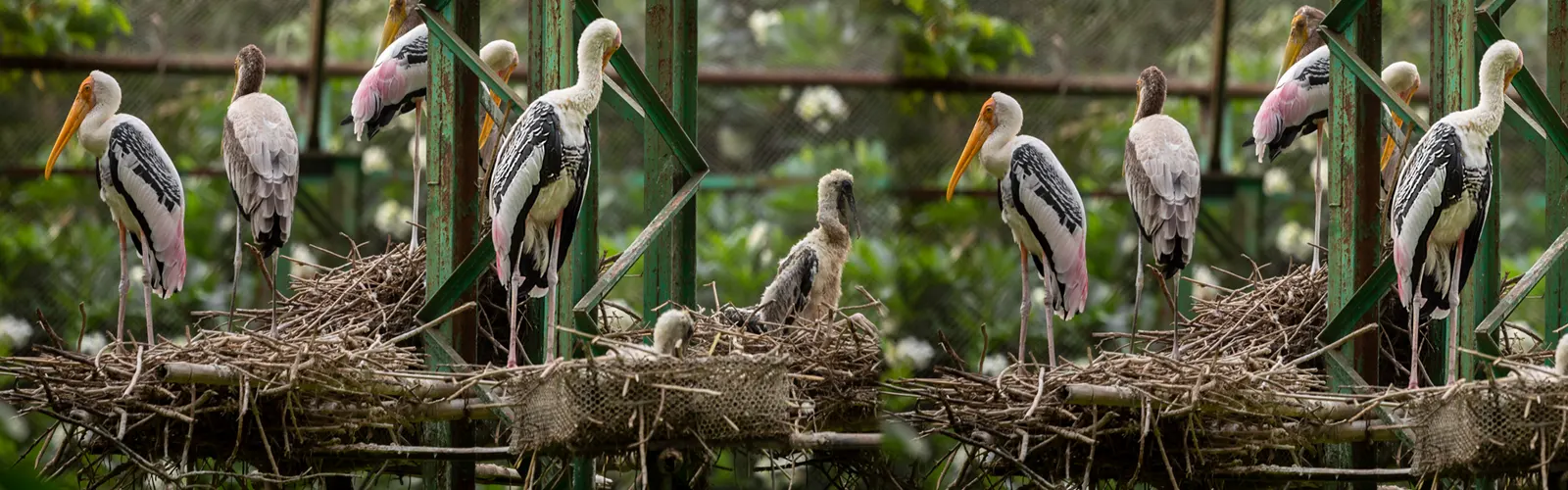
It is a vital urban oasis and bird sanctuary in Narendrapur, 20km south of Kolkata.
Its uniqueness is a "safe haven" for a wide array of wildlife amidst the chaos of a major metropolis. It boasts over 150 bird species, including the rare Large-billed Reed Warbler, which was rediscovered in India here after over a century. This rich biodiversity, coexisting with small mammals, reptiles, butterflies, and orchids in a small 17-acre area, is a haven for birdwatchers and nature enthusiasts mix of century-old fruit-bearing trees like mango, jackfruit, coconut, and tamarind, along with bamboo groves and ornamental plants, forming a thick canopy, making it a unique ecological hotspot. Sanctuary Tourism offers for visitors, Birdwatching, Nature Connection, Walking Trails, Photography.
Attractions in Chintamani Kar Bird Sanctuary
The primary attraction at the Chintamani Kar Bird Sanctuary is the diverse range of birds and rich natural habitat it offers for nature walks and photography. The sanctuary itself, a preserved urban oasis, is the main point of interest rather than specific internal landmarks.
Kayaler Bagan: A lush green sanctuary spanning 17 acres within the urban limits of South Kolkata, the sanctuary (locally known as Kayaler Bagan, or "orchard of ponds") is a haven of biodiversity. It was originally an old mango orchard and features a dense forest canopy, walking trails, and small water bodies that attract a variety of flora and fauna.
The sanctuary is renowned as a paradise for birdwatchers and macro photographers, home to over 150 species of birds (both resident and migratory), a wide variety of butterflies, ferns, and orchids. Notable bird sightings include the Blue-throated Flycatcher, Tickell's Thrush, Common Hawk Cuckoo, and different species of woodpeckers. It also hosts small wildlife like civet cats, jungle cats, and monitor lizards.
The ideal time to visit is during the winter and spring months, from October to March, when migratory birds are abundant, and the weather is pleasant for exploring the trails.
Early mornings are recommended for the best birdwatching opportunities.
Entry fees: As of recent reports, entry to the sanctuary is free.
Nearby Attraction
Chintamoni Kar Sangrahalay: A museum is located just beside the bird sanctuary, showcasing the works of the renowned sculptor Chintamani Kar, after whom the sanctuary was named.
Entry to the museum is also free.
Best Time To Visit Chintamani Kar Bird Sanctuary
The optimal time to visit Chintamani Kar Bird Sanctuary is during the winter months (November–February), when migratory birds arrive, and conditions are favourable for birdwatching.
The sanctuary is officially open from 7:00 AM to 5:00 PM.
Morning: 7:00 AM–9:00 AM (Peak Birdwatching)
Arriving at opening time gives you the best chance for birdwatching, as early morning is when birds are most active and visible, and lighting is best for photography.
Explore the inner trails. Head toward the denser parts of the sanctuary where fruit trees, like mango and jackfruit, are abundant. Rare species such as the Blue-throated Flycatcher and Tickell's Thrush are often sighted here. Move slowly and quietly to avoid disturbing the birds.
Set up your photography gear. Find a quiet spot near a water source or thick foliage and wait patiently. Use a telephoto lens to capture stunning shots of the avian life.
Late Morning: 9:00 AM–11:00 AM (Nature Walk)
Enjoy a leisurely walk. As the sun rises and bird activity lessens, take a more relaxed stroll along the main walking trails. This is a good time to appreciate the lush greenery, ferns, and orchids.
Observe other wildlife. Keep an eye out for other fauna that can be spotted here, such as various species of butterflies and spiders, or even small mammals like civet cats.
Take a rest. Use one of the benches placed at intervals throughout the sanctuary to relax and listen to the natural sounds.
Midday: 11:00 AM–2:00 PM (Lunch Break)
Exit the sanctuary for lunch. Food is not allowed inside to keep the area clean and prevent disturbance to the wildlife.
Find refreshments nearby. You can find small tea stalls and local eateries a short walk or drive away from the sanctuary.
Afternoon: 2:00 PM–4:30 PM (Second Birding Session)
Re-enter the sanctuary. After lunch, head back to the sanctuary for another round of exploration. The late afternoon golden hour provides great light for photography.
Focus on different trails. Explore any paths you might have missed in the morning or return to a particularly fruitful spot for a second chance at a good sighting.
Wind down your visit. As closing time approaches, slowly make your way back toward the entrance, taking in the final sights and sounds of the forest before it closes for the day.
Activities in Chintamani Kar Bird Sanctuary
The main activities are birdwatching, nature walks, and wildlife photography. Located near Kolkata, this urban forest offers a chance to see a variety of bird species, butterflies, and other small wildlife.
Birdwatching and photography
The sanctuary is home to over 150 species of birds, like the Common Hawk Cuckoo, Emerald Dove, White-throated Fantail, Blue-throated Flycatcher, and Large-tailed Nightjar, a haven for birdwatchers and photographers. Bring binoculars and a camera with a long lens for the best experience.
Nature walks: Explore the sanctuary's lush environment by walking along the paths that wind through dense foliage, including mango, jackfruit, and tamarind trees. While walking, you can observe a variety of flora, including beautiful orchids and ferns. Keep an eye out for butterflies and other small creatures. Wear comfortable walking shoes and bring mosquito repellent, as the dense forest has mosquitoes.
Wildlife spotting
Besides birds, the sanctuary supports other forms of wildlife, small mammals, including civet cats, jungle cats, and jackals, have been reported in the area, also home to reptiles and a variety of interesting insects.
How To Reach Chintamani Kar Bird Sanctuary
- By Metro:
Take the metro to Kavi Nazrul Station. From there, you can take a local auto or taxi to the sanctuary. - By Train:
Go to Sealdah Station, take a local train to Garia Bazar Station. From Garia Bazar, take an auto to the sanctuary. Specifically, go to Rathtala More and then take an auto from there. - By Road (Car or Taxi):
Drive through Diamond Harbour Road (NH12), which connects Kolkata to Narendrapur. The sanctuary is in Narendrapur, approximately 20 km from Kolkata.
If coming from the nearest airport, Netaji Subhas Chandra Bose International Airport in Kolkata, it is about 56 km away.