
Hazarduari Palace & Museum Travel Guide
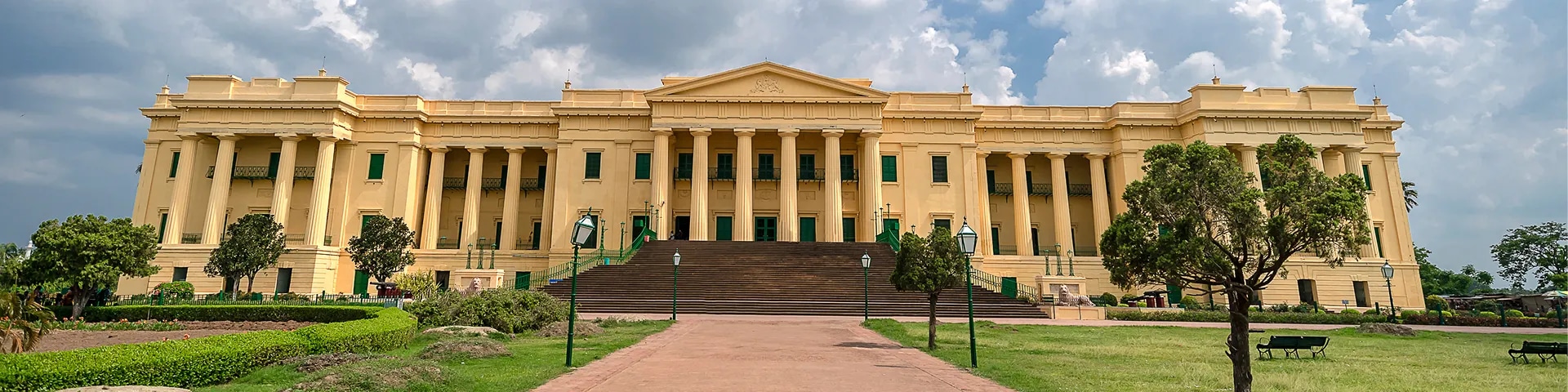
Hazarduari Palace & Museum in West Bengal's Murshidabad is the spectacular heritage of eastern India. Built by the skilled hand of British architect Duncan MacLeod in the 19th century by Nawab Nazim Huma Yun Jah, the palace itself is a stunning blend of European neoclassical style of architecture and Nawabi opulence. The "Palace of a Thousand Doors," the palace has indeed been endowed with 1,000 doors, 900 real doors and 100 imaginary doors tastefully crafted to puzzle potential burglars. A Museum of ASI now, a majestic treasure house of material which gives an insight into the monarchical history of Bengal. Bhagirathi banks spanning 41 acres, Kila Nizamat palace complex is a heritage enthusiast's place, architecture enthusiast's place, and history enthusiast's place as a whole. Its designation as a museum in 1985 has been a move towards its conservation as a heritage center, and no way, a visitor to West Bengal's rich heritage to skip it.
About Hazarduari Palace & Museum:
Hazarduari Palace or Bara Kothi was built in the reign of Bengal, Bihar, and Orissa Nawab Nazim Huma Yun Jah between 1829 and 1837. The work on the palace began on 9 August 1829 and was completed in December 1837 for an amount of over 16 lakh gold coins. The palace was built by Scottish architect Colonel Duncan MacLeod of the Bengal Corps of Engineers. Nizamat Fort along the Bhagirathi River was destroyed to build the palace. The palace accommodated the residence of Nawab until its final days. It was acquired by the ASI in 1985 for restoration and as a museum. It contains about 4,742 antiquities of which about 1,034 are mounted on show in 20 galleries. ASI-governed museum by Dr. Gopinath Jena possesses the sole Nawabi-era items like the memorabilia of the Battle of Plassey, manuscripts, and empire-era relics.
What to Expect?
A trip to Hazarduari Palace & Museum is to watch a glittering page of hyper-real Bengal history, where excess and stress are interwoven on serene banks of Bhagirathi River. A tour begins with the three-storey front facade of palace, a neoclassical jewel ornamentation with triangular pediment under cantilevering 52 Doric columns that are 129 metres in length and 61 metres in breadth. Even the name of the palace "Hazarduari" is mysterious with 1,000 doors—900 actual and 100 false doors to mislead intruders. Ascending the eerie 37 rock-cut steps on either side of which one can notice foreboding lion statues, one gets a sense of going into a king's palace.
The palace interior is one of untarnished beauty. Durbar Hall is the center of the palace where the second-largest chandelier of the world is suspended. Designed to be lit by 1,001 candles but now lit by 96 electric lights as a gift from Queen Victoria, it has been utilized for coronations of princes and nobles and is furnished with mirrors, thrones, and fashion-patterned designs to mark Nawabi grandeur. It boasts 20 galleries of well-chosen exhibits: skeleton soldiers of the past, swords of the Plassey war, ivory palanquins to master Italian, French, and Dutch oil paintings, and such irreplaceable manuscripts as Ain-I-Akbari, and a 20 kg handwritten Quran.
Peaceful and yet deep is the atmosphere, with the 114 lavishly decorated palace rooms—ballroom, billiard room, library, and portrait gallery—a step into Nawabi decades. Seek out a quiet and informative broth; the library itself houses more than 12,000 books and 3,000 manuscripts in English, Arabic, Persian, and Urdu. A walk through the garden can be found nearby outside across the 41-acre grounds, the sight of the river adding a natural atmosphere. There is an overall ambiance which pervades that is reflective, and with a lingering memory of royal courts and centuries past. Facilities used for access are car parking space, toilet, and drinking water but going upstairs on footpaths and hill paths can involve wearing loose footwear. Photography is allowed (on payment) but video recording is not allowed at all. The tourists will change position for 1-2 hours, but the history enthusiasts can remain longer. It is not frozen scene but living presentation of Bengal syncretic culture where Indian monarchy and European sentiment got mixed. Walking through the armory gallery of arms and armour or glancing over marble statues and porcelain vases, the experience is one of study, recreation, but a touch of royal sentiment.
Things to do at Hazarduari Palace & Museum
Spend a day exploring culture at Hazarduari Palace & Museum, where every stone speaks of Nawabi Bengal heritage. Start with an independent tour of the 20 galleries, relishing one-of-a-kind wonders such as the swords of the Battle of Plassey, ivory palanquins carried by monarchs such as Zehrun Nissa Begum, and antique arms such as a Dutch cannon. The European masters' oil paintings, gold leaf Tanjore-style artworks, and Nawab paintings in the above gallery will leave art lovers agog.
Step into majestic Durbar Hall and gaze upwards at ginormous chandelier and imagine royal durbars. Library's manuscript treasure chest, like the Ain-I-Akbari and a gargantuan Quran, or armory to window-surf for combat stats thrashed. A dash of sleight of hand by pointing out dummy doors in the 1,000 gateways, architectural sleight of hand.
Proceed to upper floors for a view of the Killa Nizamat complex, last of the photographer's destinations. Over 200 Chinese and Japanese porcelain vases gallery, bronze and stone statues sculpture museum, 10th-14th century, Royal bed and throne furniture halls. Spend some festive time and get creative with exhibit boards or use heritage routes for peak festive times.
Places to visit in Hazarduari Palace & Museum:
Hazarduari Palace & Museum is a colossus of architecture and ancient riches, every alcove yielding varied glimpses of imperial Bengal history.
- Durbar Hall: Middle-palace, where second-largest-in-the-world chandelier, beautiful carved mirrors, and the throne where Nawabi gatherings were previously maintained—a pleasure to witness grandeur.
- Armoury Gallery: Swords and arms used in Battle of Plassey laid side by side with pieces of armour, and educating us about war history.
- Royal Portrait Gallery: Tanjore paintings covered in gold leaf and colours spilleth over faces of Bengal kings.
- Special Library and Manuscript Section: Contains more than 12,000 books and 3,000 manuscripts, including the precious ones like Ain-I-Akbari and a huge Quran, highly ideal for researchers.
- Ivory and Porcelain Gallery: Delicate ivory figures of gods, procession, and palanquins and old Chinese and Japanese vases.
- Furniture and Metal ware Museum: Imperial bed, ceremonial carts, treasures of 14th century in silver and bronze.
- Gardens and Grounds: Tranquil 41-acre grounds with well-maintained green grass and river views, ideal for relaxation and photography.
- Naubat Khana and Entrance Steps: Musicians' balcony and lion-statue grand staircase, a faithful imitation of the grand entrance palace.
- Sculpture Museum: Ancient stone sculpture, marble statues, and megalithic remains.
Best Time to Visit Hazarduari Palace & Museum
Optimal time to visit Hazarduari Palace & Museum is October to March when West Bengal experiences mild and sunny weather between 11°C and 30°C. It also avoids the April to June summer with more than 38°C temperature and gets too hot to carry out a tour, particularly to the open garden and riverbank. It also avoids the heavy monsoon rain between July and September that overflows by the Bhagirathi River along with interfering with trips.
Winter month of December to February is providing gentle breezes and vast open blue sky that is best for strolling around in the 41-acre complex without getting exhausted. Weekdays, especially Tuesday to Thursday, are not as crowded, providing VIP atmosphere free from weekend tourist throng.
October holiday of Durga Puja festival or Murshidabad Heritage Festival is a wonderful idea, some of few of the palaces, lights, and promenades being palace heritage. 9 AM morning is a wonderful idea for peaceful start with gentle light of dawn well over neoclassical frontage.
How to reach Hazarduari Palace & Museum?
Hazarduari Palace & Museum is located at Murshidabad, West Bengal, and 200 km from Kolkata.
Address: Siraj Ud Doulah Road, Hazarduari, Murshidabad, West Bengal 742160.
- By Air: Nearest airport - Netaji Subhas Chandra Bose International Airport at Kolkata (200 km). Taxi or train from there to Murshidabad.
- By Train: Hazarduari Palace is 2-3 km from Murshidabad railway station, which is well connected with Howrah, Sealdah, and Kolkata by trains like Hazarduari Express.
- By Car: It is connected with Berhampore and Kolkata by car or bus on private scale; the road passes through village zones. The car parking is inside the complex.
Tips for Visiting Hazarduari Palace & Museum
- Timings: 9:00 AM to 5:00 PM and closed onFriday and national holidays.
- Admission Fee: Indian adult: Rs. 25 (cash)/Rs. 20 (online); SAARC/BIMSTEC: Rs. 25 (cash)/Rs. 20 (online); Foreigner: Rs. 300 (cash)/Rs. 250 (online). Child below 15 years free.
- Clothing and Equipment: Loose informal clothes to wear around and walking shoes for climbing the floor and stairs. Water and light refreshment to carry along as there is no canteen facility.
- Photography: Permitted on payment; video photography not permitted. Restoration of artifacts not permitted.
Nearby Tourist Spots
Murshidabad local tourist destinations:
- Nizamat Imambara (0.5 km): Largest Asian Imambara, famous for architecture and religious value.
- Chawk Mosque (1 km): Olden-day mosque with ornament work.
- Wasif Manzil (1 km): Garden surrounding the Nawabi palace complex.
- Kathgola Palace (5 km): Building in European-Jain temple style.
- Motijheel Lake (10 km): Peaceful picnic and boating place.
FAQs — Hazarduari Palace & Museum Travel Guide
Popular Tour Packages
Most booked holidays, hand-picked by our travellers