
No.4, Annai Avenue, Vasanth Nagar EXTN,
Srirangam, Trichy, Tamil Nadu ,620006.
CIN: U31100TN2010PTC078389
DUNS Number: 859496557

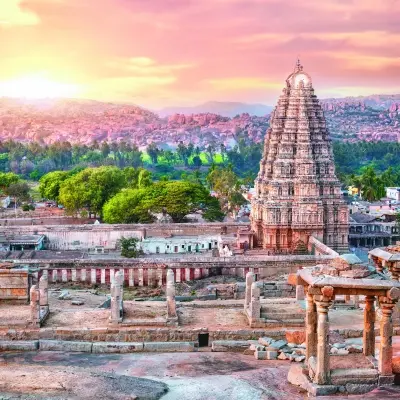
India attracts the world because it is a breathing canvas of history, culture, advancements and spirituality. From age-old civilizations such as the Indus Valley to contemporary technological hubs, India exhibits a unique blend of heritage and advancements. Its lively festivals, variety of cuisines, vibrant attire, and architectural excellence captivates millions of tourists every year. Spirituality is deeply interwoven into everyday life, visible in ancient temples, holy rivers, and age-old rituals.
One interesting facts about India is that, concurrently India also embraces modernity, exceeding globally in technology, space research, and other innovation. Cities like Bengaluru and Hyderabad remain as hubs for innovations while rural India preserves ancient practices that have sustained communities for many years. This coexistence of tradition and advancements captivates tourists, scholars and cultural lovers alike. Each visit to India offers something new—whether it’s an ancient fort, a vibrant local festival, or a natural wonder—making India a destination that persistently inspires and surprises.
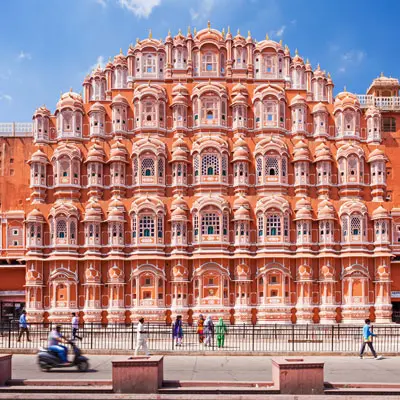
Exploring India can be overwhelming without guidance due to its vast size and diversity. Suggested tour packages make it easier for tourists to experience the best of the culture, heritage, and natural beauty of India. Heritage tours in India like the Golden Triangle, covering Delhi, Agra, and Jaipur, emphasize on Mughal architecture, palaces, and ancient forts. Spiritual tours in India take visitors to Varanasi, Rishikesh, and other sacred destinations for an immersive cultural and sacred experiences.
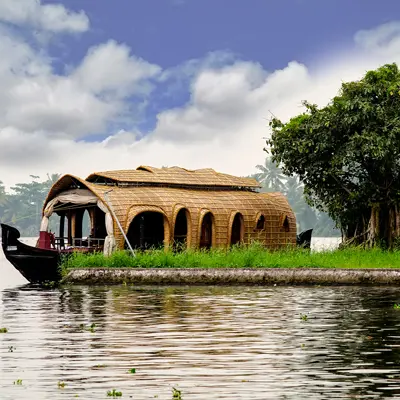
Nature and adventure enthusiasts can opt for Himalayan treks in Himachal Pradesh and Ladakh, wildlife safaris in national parks like Ranthambore or Bandhavgarh, and backwater cruises in Kerala. Luxury packages offer palace stays, Ayurvedic wellness retreats, and curated culinary journeys. These packages allow tourists to explore India completely while assuring a rich experiences, cultural understanding, and comfort throughout their journey.
India is full of extraordinary facts that many may not know. It’s historical, scientific, and cultural contributions often predate similar developments elsewhere. From ancient surgery to early universities, India has been a pioneer in multiple domains.
Contemporary India continues to impress with its unique experiments—villages without doors, floating post offices, and communities without money or religious divisions. Extreme engineering feats like the world’s highest motorable roads and tallest statues coexist with ancient temples, rare biodiversity, and record-breaking festivals. These little-known aspects highlight India’s extraordinary diversity, innovation, and cultural depth, revealing a nation that constantly surprises even those who think they know it.
Millions of years ago, the Indian landmass persisted as an isolated island in the southern hemisphere. Over time, tectonic movements resulted in its collision with the Eurasian plate, creating the Himalayan mountain range and the rich geological diversity witnessed today. This prehistoric journey clarifies India’s diverse landscapes, from deserts and plains to mountains and plateaus.
One interesting facts about India is that, name “India” comes from the Indus River, known in ancient Sanskrit as “Sindhu.” The Persians transformed it into “Hindu,” and later the influences of Greek and Latin shaped it into “Indos” which eventually became as “India.” The Indus River was the essence of the Indus Valley Civilization, one of the earliest urban cultures in the world. Cities like the Harappa and Mohenjo-Daro exhibited advanced urban planning, writing systems and trade.
As of 2023, India has become the world’s most populous country, exceeding China, with over 1.42 billion people. India’s demographic composition is notable for its youth, with more than half of the population under 25, creating immense potential for innovation and economic growth. Metropolitan cities like Mumbai, Delhi, and Bengaluru are hubs of technology, commerce, and education, while rural areas rely on agriculture and traditional livelihoods.
India globally ranks second in English speakers, after the United States. Though only a fraction speak English as their first language, millions of people use it professionally, academically, and socially. English links the linguistic diversity of India, with over 1,600 languages spoken across the country. It has facilitated significantly to India’s global competitive spirit in IT, outsourcing, and international business. Universities, corporate environments, and media functions extensively in English, facilitating India to seamlessly connect with the world.
Also Read:- 10 Places to Visit in India Before You Die | Incredible India Tour
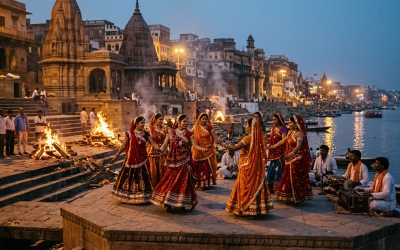
Varanasi is one of the oldest living cities in the world, with over 3,000 years of relentless habitation. Located along the sacred Ganges River, it is a significant spiritual center for Hindus, inviting pilgrims who perform rituals, aarti ceremonies, and indulge in holy bathing. The city’s narrow streets, age-old temples, and ghats generate a unique religious and historical experience. Varanasi has also been an important hub for learning, music, and culture for many centuries. devotees believe that take a sacred bath in the Ganges cleanses the sins, while its cremation ghats represent the cycle of life and death. The city embodies India’s spiritual endurance cultural richness, and never ending historical significance.
One interesting facts about India is that ancient India introduced the surgical practices even long before the arrival of modern medicine. Sushruta documented complex procedures like rhinoplasty, cataract surgery, and reconstructive procedures in the Sushruta Samhita around 600 BCE. His work featured anaesthesia, suturing, sterilization and also post-operative care. Using herbal remedies and advanced instruments, early Indian surgeons represented remarkable skill. These methods influenced later surgical practices in other civilizations. The facts about history of India suggests that ancient India’s medical knowledge highlights a profound understanding of hygiene, anatomy and healing, highlighting that scientific investigation and human welfare were greatly valued in Indian culture centuries ago
Also Read:- UNESCO World Heritage Sites in India – Part 1
Nalanda University, established in the 5th century CE, was the world’s first residential international university, and this is an important facts about India Students from China, Korea, Japan, Tibet, and Central Asia came here creating a global scholarly community. Nalanda offered courses in philosophy, mathematics, astronomy, medicine, and literature, with a huge library of manuscripts. Monastic teachers mentored students, and residential life promoted intellectual exchange. Nalanda’s legacy represents India’s early dedication towards education, international collaboration, and scholarly excellence.
The concept of Zero, as well as Algebra, Trigonometry, and Calculus, was given by India. The ancient Indian mathematician Shreedhara Acharya gave the Quadratic Equation, which is also known as Shreedhara Acharya’s formula. Bodhayana discovered the Pythagoras Theorem 300 years before Pythagoras did. Aryabhatta revealed the form of the Earth and that it spun on its axis much before Copernicus.
India houses more than 300,000 mosques, when compared to any other Islamic country in the world. This showcases India’s rich diversity in religion and pluralistic society, where multiple faiths have harmoniously coexisted for centuries. Architectural marvels such as the Jama Masjid in Delhi, Mecca Masjid in Hyderabad, and Gol Gumbaz in Karnataka showcase intricate Islamic artistry melded with Indian design influences and this is an important fact about India Mosques in India are not only places of worship but also significant hub for social welfare, education and community gatherings.
Padmanabhaswamy Temple is renowned as the world’s wealthiest temple. This temple features hidden vaults and treasures like gold, jewels, and artifacts valued in billions of dollars, and this is a popular fact about India Padmanabhaswamy Temple is dedicated to Lord Vishnu. This temple is beautified with astounding Dravidian architecture with beautifully carved pillars and grand gopurams. Beyond its immense material wealth, the temple remains as a spiritual hub and community center, hosting many festivals, undertaking many charitable events, and educational programs.
Also Read:- 10 Best Luxury Hotels in the World for Your Honeymoon Tour | Couple Travel Goals
Taj Mahal is globally renowned as a symbol of love, constructed by Emperor Shah Jahan in the loving memory of his wife Mumtaz Mahal. Made completely of white marble with detailed inlay work, the Taj Mahal symbolizes architectural excellence and the artistic mastery of Mughals. This is an important facts about India. Its symmetry, reflective pools, meticulously maintained gardens, and detailed carvings captivates millions of visitors every year. Being ranked as the second most-loved tourist attaction in the world, Taj Mahal endures to inspire admiration from tourists, historians, and architects globally.
Tirupati Balaji Temple is a popular temple in India that pulls millions of pilgrims annually, making it the most-visited holy site globally. Located on the Tirumala hills, this temple is dedicated to Lord Venkateswara, an incarnation of Vishnu. Devotees undertake long treks, offer expensive donations, and partake in rituals as acts of devotion. Festivals like Brahmotsavam invites large crowds, showcasing India’s spiritual vitality and community engagement. The temple administration also manages accommodations, dining, and other services for visitors effectively
India’s first rocket launch in 1963 launched at the humble Thumba Equatorial Rocket Launching Station and this is an important facts about India. Exceptionally the components of the rockets were transported using bullock carts and bicycles and the launch was carried out at a local church before dedicated infrastructure was constructed. This modest starting marked the foundation of the Indian Space Research Organisation (ISRO).
The Jantar Mantar in Jaipur has the world’s largest stone sundial, the Samrat Yantra, constructed in 18th century by Maharaja Sawai Jai Singh II. Designed for accurate astronomical observations, it could calculate time, track planetary positions, and even foresee eclipses. The instruments at Jantar Mantar reflects India’s advanced understanding of astronomy and mathematics even many years ago.
New Lucky Restaurant in In Ahmedabad, offers a unique dining experience beside age-old graves. People can enjoy traditional Indian cuisine while being enveloped by historical tales. The restaurant has respect for the sacred sites while offering an unforgettable culinary experience. This unique setup illustrates India’s cultural transparency and its potential to integrate heritage into modern lifestyle experiences.
Shani Shingnapur in Maharashtra is very popular for houses with neither door nor locks. This is an Interesting Fact about India. Residents of the village believe that Lord Shani safe guards the community, protecting theft and crime. The village has become a famous tourist attraction in India demonstrating the country’s cultural uniqueness and deep spiritual trust. This community showcases a lifestyle that depends on faith and social cohesion rather than traditional security, reflecting India’s ability to meld tradition, belief, and functional lifestyle
One Interesting Fact about India is that there is a village in Uttar Pradesh was temporarily renamed as Snapdeal.com Nagar as part of a sanitation and village development programs. The campaign enhanced the infrastructure, cleanliness, and awareness, while creatively encouraging community involvement. This program highlights India’s ability to merge contemporary branding and village development, making it an advanced example of public engagement and corporate social responsibility.
Indian Railways carries over 20 million passengers every day, matching nearly the population of Australia. With expansive networks, it links cities, towns, and rural areas, endorsing commerce, education, and tourism. This enormous scale showcases India’s logistical proficiencies and the significant role of railways in national integration, economic growth, and everyday life.
Golden Temple serves over 100,000 free meals every day in its community kitchen. This is an Interesting Fact about India Volunteers prepare and serve food irrespective of their caste, religion, or social status, illustrating Sikh principles of seva (selfless service). The program highlights India’s primary concentration on humanitarian values, equality, and community service, making it one of the largest and most influential charitable endeavours worldwide.
Auroville, established in 1968, is a unique international township where residents live without currency or formal religion. People from over 50 countries work together on sustainability, education, arts and culture. Auroville demonstrates India’s readiness to experimentation, global harmony and alternative social framework models, captivating artists, researchers and spiritual seekers across the globe.
The Karni Mata Temple in Rajasthan is one of the strangest holy spots in India where rats are worshipped.
The Channapatna Dog Temple in Karnataka worships Dogs.
The Bullet Baba Temple is devoted to a 350cc Royal Enfield ‘deity’ and the offering here is beer, of the ‘Bullet’ brand.
People offers toy planes at Shaheed Baba Nihal Singh Gurudwara, popularly known as ‘Hawaijahaj‘ (Aeroplane) Gurudwara in hopes to travel abroad. It is situated in Jalandhar in Punjab.
Sathuranga Vallabhanathar Temple in Tamil Nadu is dedicated to the deity of Chess. Lord Shiva is the presiding deity of the temple who is known by the name Sathuranga Vallabhanathar, the Lord of Chess.
Kodinhi in Kerala is popular for its peculiarly high twin birth rate, with over 400 pairs of twins. Researchers have studied genetic, dietary, and environmental factors supporting to this phenomenon, even when no definitive explanation exists. The village captivates attention from scientists, journalists, and curious travelers, showing the remarkable and mysterious demographic quirks of India
Statue of Unity, elevating 182 meters tall, pays reverence Sardar Vallabhbhai Patel, a key major figure in India’s independence. It outshines all other statues in the world especially in height. This statue stands as a symbol of national unity, engineering excellence, and monumental ambition. Tourists from across the globe visit to witness this contemporary marvel, which blends cultural reverence with technical accomplishment.
The Chenab Bridge in Jammu and Kashmir is the world’s highest rail bridge, elevating up to 359 meters above the river. This structure symbolizes a major engineering excellence in challenging Himalayan terrain, blending precision, innovation and structural perseverance. This bridge features India’s potential to undertake record-breaking infrastructure projects while assuring connectivity in remote regions.
Lonar Lake in Maharashtra was created by an impact of a meteor over 50,000 years ago. The Crater Lake, enveloped by basalt rock formations, is a unique geological phenomenon. It has the greatest hand in preserving unique biodiversity and has cultural and historical importance being mentioned in historical texts and local folklore. Scientists study the lake for its rare saline and alkaline ecosystem, making it a site of both natural and academic curiosity.
The road to Umling La in Ladakh reaches the height of 5,882 meters, making it the world’s highest motorable road. It allows strategic connectivity in the Himalayas and challenges both engineering and human resilience. The road offers a breathtaking landscapes, attracts adventure tourists, and demonstrates India’s infrastructure capabilities in extreme environments.
The floating post office at Dal Lake, Srinagar, remains a unique platform on water. This one-of-a-kind postal service system has functioned for decades, blending tradition with practicality in a picturesque setting. It shows that India’s ingenuity in adapting necessary services to hardest terrains and preserves a cultural charm that attracts visitors.
The Bailey bridge over the Chenab River in Jammu and Kashmir is renowned as the highest bridge in the world. The structure involved innovative engineering, resilience and strategic planning in the toughest Himalayan terrain. The bridge promotes rail and road transport, assuring connectivity in otherwise rural areas, while also standing as a sign of India’s technological and infrastructural accomplishments
Narendra Modi Stadium is the largest cricket stadium in the world with a seating capacity going beyond 132,000 spectators. It facilitates international matches, domestic tournaments, and major events. The stadium represents India’s passion for cricket, contemporary sports infrastructure, and ability to conduct events on a world-class scale, inviting sports enthusiasts from across the globe.
Situated at 2,444 meters above sea level, Chail Cricket Ground is the world’s highest cricket ground. Constructed during the British colonial era, it is beautifully enveloped by breathtaking mountains and forests, providing a distinctive sporting experience. Its altitude challenges players and offers breathtaking views, blending sport with natural beauty.
The Kumbh Mela, occurs in rotation among four cities, draws tens of millions of pilgrims, making it one of the world’s largest religious gathering. Devotees take a holy dip in sacred rivers, believing it cleanses their sins. The festival blends tradition, spirituality culture, and logistics on an excellent scale, reflecting the country’s organizational and cultural significance
Mawsynram in Meghalaya is bestowed with over 11,000 millimetres of rain annually, making it one of the wettest inhabited place on Earth. Its heavy monsoons facilitates lush forests, unique biodiversity, and traditional lifestyles suited to extreme rainfall. The village captivates researchers, nature lovers and travelers craving for an extraordinary natural phenomena.
India is home to the largest vegetarian population globally, shaped by religious, ethical, and cultural practices. Vegetarianism is widespread among Hindus, Buddhists and Jains and has molded Indian agriculture, cuisine and nutrition. India’s rich diversity of vegetarian dishes mirrors creativity in food, optimizing health, flavor, and cultural tradition.
Games such as chess, snake and ladder, and snooker have their roots in India. Chess gradually emerged from the ancient game Chaturanga, highlighting planning and vision. Snake and ladder were initially moral lessons teaching morality and immorality. Snooker emerged from traditional cue based games played by British officers in India. These games emphasize India’s legacy on global entertainment culture and its role in shaping analytical thinking, morality, and recreation worldwide.
Chess is one of the oldest games in the world that is still played and it was invented in India around the 6th Century AD.
Snake and Ladder, another popular board game regarded today as a worldwide classic is also originated in ancient India as Mokshapat or Moksha Patam to teach young children about morals and karma. It was later transported to England by the colonial rulers with some modifications.
The game of Snooker was conceived in Jabalpur in the Indian state of Madhya Pradesh in 1875, and it was at the Ootacamund Club in Ooty, Tamilnadu where it took shape.
India is the birthplace of yoga and martial arts such as Kalaripayattu. Yoga combines, meditation, physical postures and breathing techniques, fostering physical and mental wellness worldwide. Kalaripayattu, an ancient martial art originated from Kerala, blends defense techniques with philosophy and agility training. These practices have shaped global fitness, spirituality, and the traditions of self-discipline
Shampoo initially stemmed in India, derived from the Hindi word “chāmpo,” which means to massage or knead. Ancient herbal melds were intended for hair care, integrating natural ingredients such as neem, shikakai, and amla. Indian traders bought forward these practices to Europe, where the concept changed into modern shampoo. This invention shows the country’s early endeavours to personal hygiene, wellness, and international trade of cultural practices.
India is a global pioneer in outsourcing, especially in IT, client support services, and business process management. India’s proficient workforce, multilingual expertise and cost-efficient solutions have drew multinational corporations over the globe. Cities like Bengaluru, Hyderabad, and Pune are significant hubs of innovation, software development, and outsourcing services. India’s excellence in this sector has redefined global business tactics promoting economic growth and international collaboration prospects.
In Kerala, elephant care features seasonal “spas” where elephants are delighted with soothing massages, baths, and herbal treatments to maintain their overall health and vitality. These significant practices blend traditional knowledge, veterinary care, and ethical treatment. Such programs mirror India’s deep cultural reverences towards elephants, melding animal welfare, tourism, and as well as spirituality.
One unique facts about India is that, it has the third-highest number of listing in the Guinness Book of World Records. These include achievements in education, sports, festivals and unique cultural feats. These records showcase India’s diversity, advance population scale, and dedication to superiority across domains, serving as a nation proud of its accomplishments on a global forum.
In Concluding, with its rich culture, diverse languages, ancient civilization, vibrant colors, various cine industries, spirituality, wildlife, and festivals, India is just some of the things that make it truly unique. Whether you’re planning to visit India or just want to learn more about this fascinating country, there’s always something new to discover.
We hope you find this blog interesting and intriguing. If you enjoyed this long list of fun and fascinating India Facts, do share it with all your friends without thinking twice, and let their minds be blown away too!
Stay tuned for more interesting blogs from us.
Keep reading Indian Panorama blogs and follow us on Instagram and Facebook for regular updates and beautiful pictures of India with soulful captions.
Indian Panorama will help you to choose destinations and our Travel Guides will guide you to experience a joyous journey throughout the vistas of India.
Mail: enquiries@indianpanorama.in
Phone: +91 431 4226122
For more travel details and bookings, feel free to visit, www.indianpanorama.in and get a free quote for your tour itineraries.

Share This News