
No.4, Annai Avenue, Vasanth Nagar EXTN,
Srirangam, Trichy, Tamil Nadu ,620006.
CIN: U31100TN2010PTC078389
DUNS Number: 859496557

Introduction
Welcome to the timeless realm of Varanasi —an ancient realm where time seems to pause, prayers echo endlessly, and the sacred Ganges River flows like a bridge between worlds, drawing pilgrims, seekers, and wanderers from across the globe.
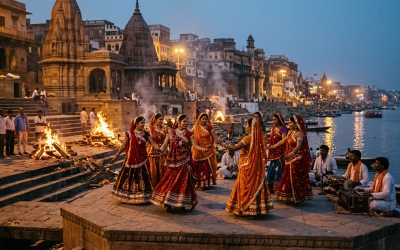
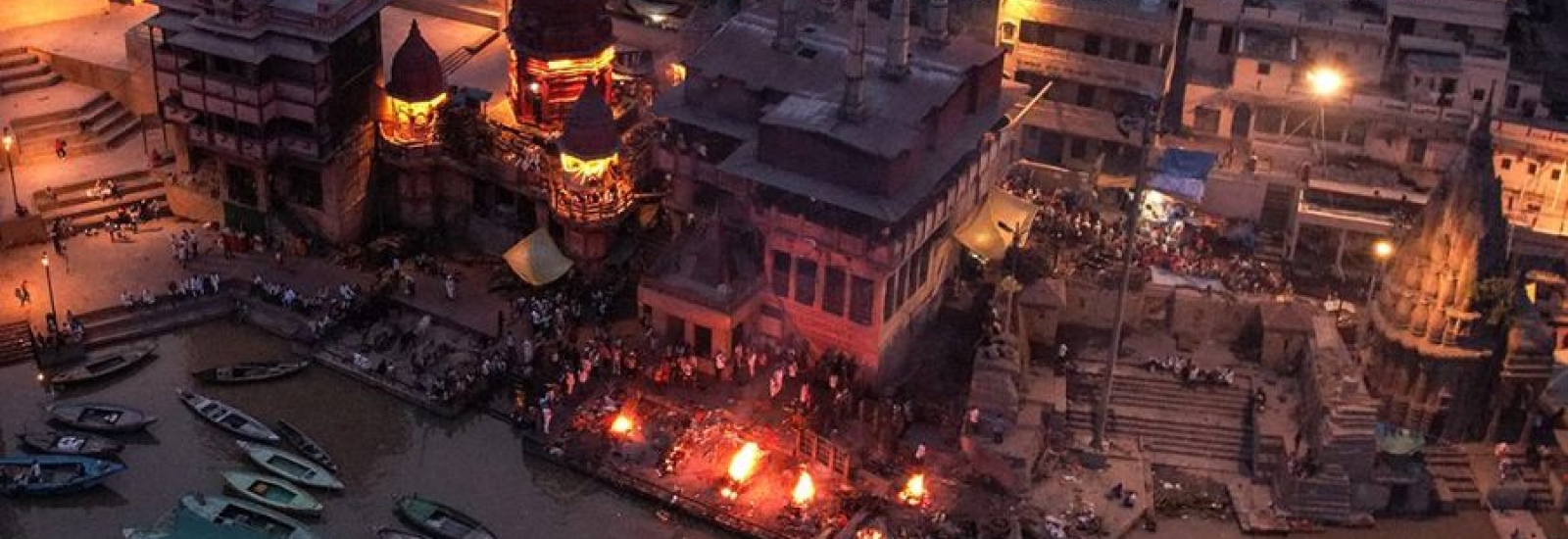
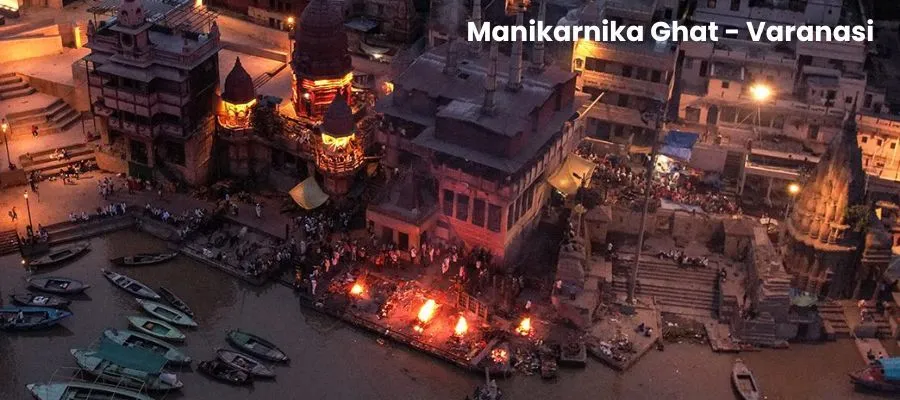
In this city, death is not an end, but a beginning—a journey toward liberation. The fire of devotion never fades. At the heart of this belief stands Manikarnika Ghat. Here, funeral pyres burn day and night, carrying souls toward their final destination. Amidst chants, smoke, and centuries of faith, a rare ritual unfolds.
Imagine this—amidst burning pyres, under rising smoke, young women step into the fire-lit night… not in grief, but in devotion. They dance. Strange? Unbelievable? Or something far deeper?
Have you ever heard of a ceremony where life is celebrated in the presence of death—where dance becomes a bridge between the mortal and the divine? A ritual so rare and profound that it has continued for over 282 years.
Let’s step into this extraordinary tradition and uncover the story behind this sacred dance in Varanasi.
The 282-Year Legacy: Why This Tradition Still Lives
To truly understand this captivating tradition, we need to delve into the rich history of Varanasi - a city where every nook and cranny holds a fascinating tale. Centuries ago, in the 17th century, Raja Man Singh erected a temple in the cremation grounds, dedicating it to Masan Nath - a manifestation of Lord Shiva believed to reside among the funeral pyres, overseeing the eternal cycle of life and death.
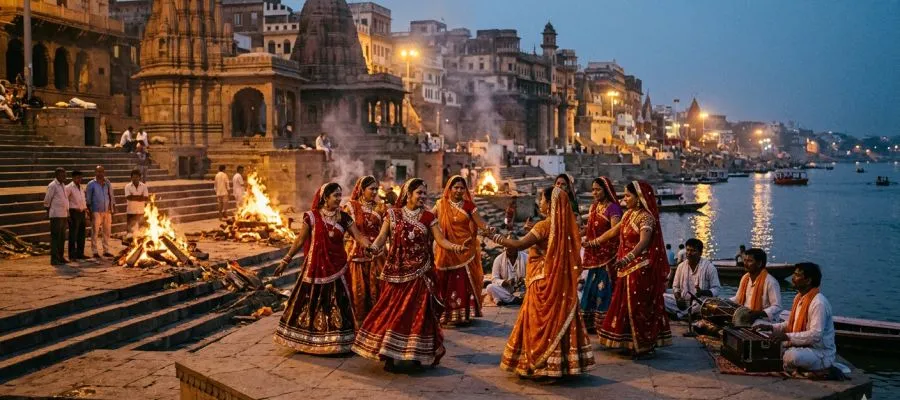
The king had a divine vision, and when he sought to organize a musical offering, artists gradually gathered, inspired by the sacred and powerful atmosphere of the place. It was the courageous courtesans (nagar vadhus) who stepped forward, dancing in devotion beside the burning pyres and the sacred Ganges. Their fearless offering became a cherished tradition - one that continues to this day, where faith triumphs over fear and devotion finds its voice even amidst the solemn rituals of death.
Even now, this captivating ritual endures, carried forward with the same unwavering faith and devotion, reminding us that the most powerful traditions can often arise from the most unexpected beginnings.
What is the Mayana Dance and the Mythology behind the Ritual?
The Mayana dance is a captivating ritual that takes place at the cremation grounds, honouring Mahashmashan Nath, a powerful manifestation of Lord Shiva—the eternal guardian of life, death, and liberation. The term "Mayana" refers to these sacred grounds, symbolizing the fleeting nature of human existence. Here, dance becomes a profound language of devotion, performed not in grand halls but in the presence of fire, ash, and the ultimate truths of life.
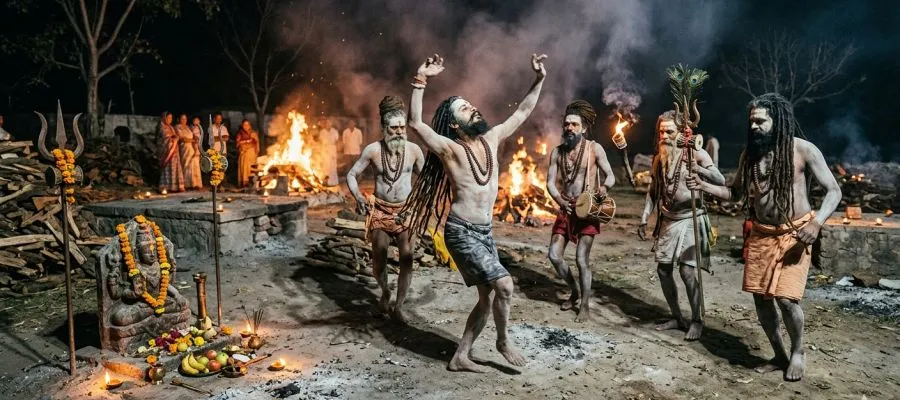
To truly understand this tradition, one must immerse oneself in the spirit of Kashi. In Varanasi, death is not mourned, but revered, as it is believed that dying here grants moksha, liberation from the cycle of rebirth.
According to mythology, Baba Shamshan Nath, also known as Mahashmashan Nath, is a manifestation of Lord Shiva in his most intense and transformative form. He is the lord of cremation grounds, where the cycle of life ends, and liberation begins. Devotees believe he resides among the ashes, guiding souls toward moksha.
The cremation ground, therefore, is not a place of sorrow—it is a gateway. And the dance? It is a celebration of this transition—an offering that acknowledges both the end and the eternal.
Transgender women actively participate, believing the ritual will bless their next life. More than a performance, it is a sacred offering, drawing dancers from Varanasi and nearby districts into a shared act of worship.
A Dance among Flames: The Unseen Side of Varanasi
Imagine stumbling upon a mesmerizing dance performance amidst the burning pyres of Varanasi - a sight that seems almost surreal, yet it's a 282-year-old tradition deeply rooted in the spiritual fabric of this holy city.
Every year, on the seventh night of Chaitra Navratri, the cremation grounds transform into a sacred stage. Here, death is not feared—it is celebrated as liberation.
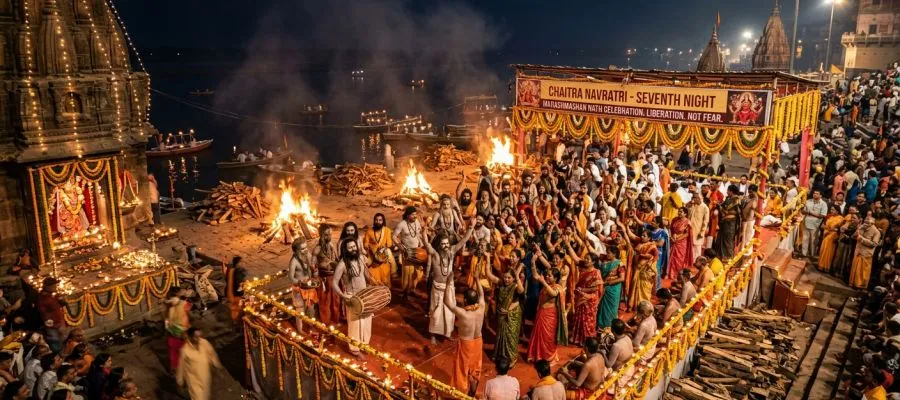
At the heart of this powerful ritual is the Mayana Dance, performed by women from a community once known as nagar vadhus—courtesans—who today continue to uphold this sacred tradition with strength and resilience.
What Happens During the Mayana Dance Ceremony?
As evening falls, the Ghat fills with mourners and a quiet sense of anticipation. The performers gather near the temple of Mahashmashan Nath Temple, offering a dance dedicated to the deity. They then move to a makeshift stage along the Ganges, where the performance continues against the backdrop of burning funeral pyres—a stark yet profound reminder of life’s impermanence.
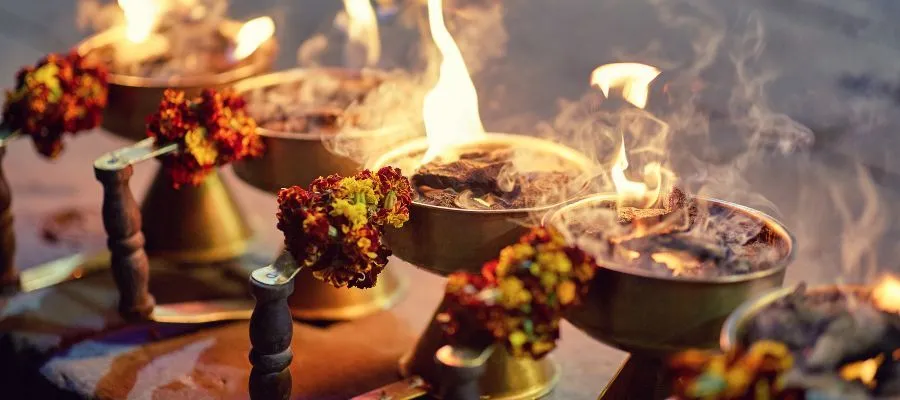
The ceremony concludes with the shayan aarti, marking the end of the night’s spiritual offerings.
Why is the Mayana Dance in Varanasi Unique?
Witnessing the Mayana Dance is not about tourism—it is about perspective. It invites you to look beyond fear and embrace a deeper understanding of life and death. In the soft glow of funeral pyres, you witness courage, devotion, and a timeless cultural thread that has endured for centuries.
Rooted in faith and resilience, this ritual reflects the profound spiritual essence of Varanasi—raw, powerful, and deeply transformative for those who experience it.
When Does the Mayana Dance Take Place?
Shringar Festival and Mayana Dance: What’s the Connection?
The Shringar Festival is a captivating three-day celebration dedicated to Baba Masan Nath, revered as the guardian of Varanasi's cremation grounds. This sacred annual event blends devotion with powerful symbolism rooted in life, death, and transformation. On the final day, devotees express their faith through mesmerizing ritual dance offerings.
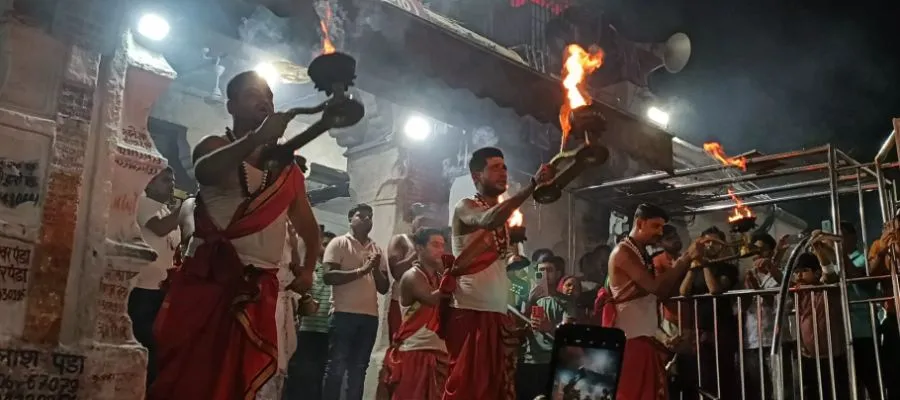
What makes this festival truly extraordinary is that these performances continue even as funeral rites take place nearby—reflecting an unwavering devotion and complete spiritual surrender. The Mayana Dance tradition in Kashi adds deeper meaning to this festival, highlighting how devotion here transcends fear and embraces the most intense realities of life.
Best Time to Experience Mayana Dance
Plan your visit during Chaitra Navratri (March–April), when the sacred Mayana Dance ritual is performed at its most vibrant and spiritually powerful.
Traveller Tips
Conclusion
The Mayana Dance is not merely a ritual, but a profound reflection of life's deepest truths. In a world that often fears death, this ancient tradition teaches acceptance, transformation, and spiritual continuity. It urges us to look beyond grief and see death as a passage, not an end. Here, amidst fire and ash, devotion takes on a unique form—where dance becomes prayer, and movement becomes meditation. This is not something you simply read about—it is something you feel. Because some journeys are not about ticking destinations off a list—they are about discovering stories, traditions, and emotions that stay with you forever.
What are you waiting for? Discover a deeper, more soulful side of India with Indian Panorama.
How to reach:
By Air: Lal Bahadur Shastri International Airport, about 25 km from the city, with easy taxi access to the ghats.
By Train: Varanasi Junction Railway Station offers excellent rail connectivity, with autos and taxis available to reach Manikarnika Ghat.
By Road: Varanasi is well-connected by highways to cities like Lucknow and Patna, with frequent buses and taxis available.
Share This News