
Leh Ladakh
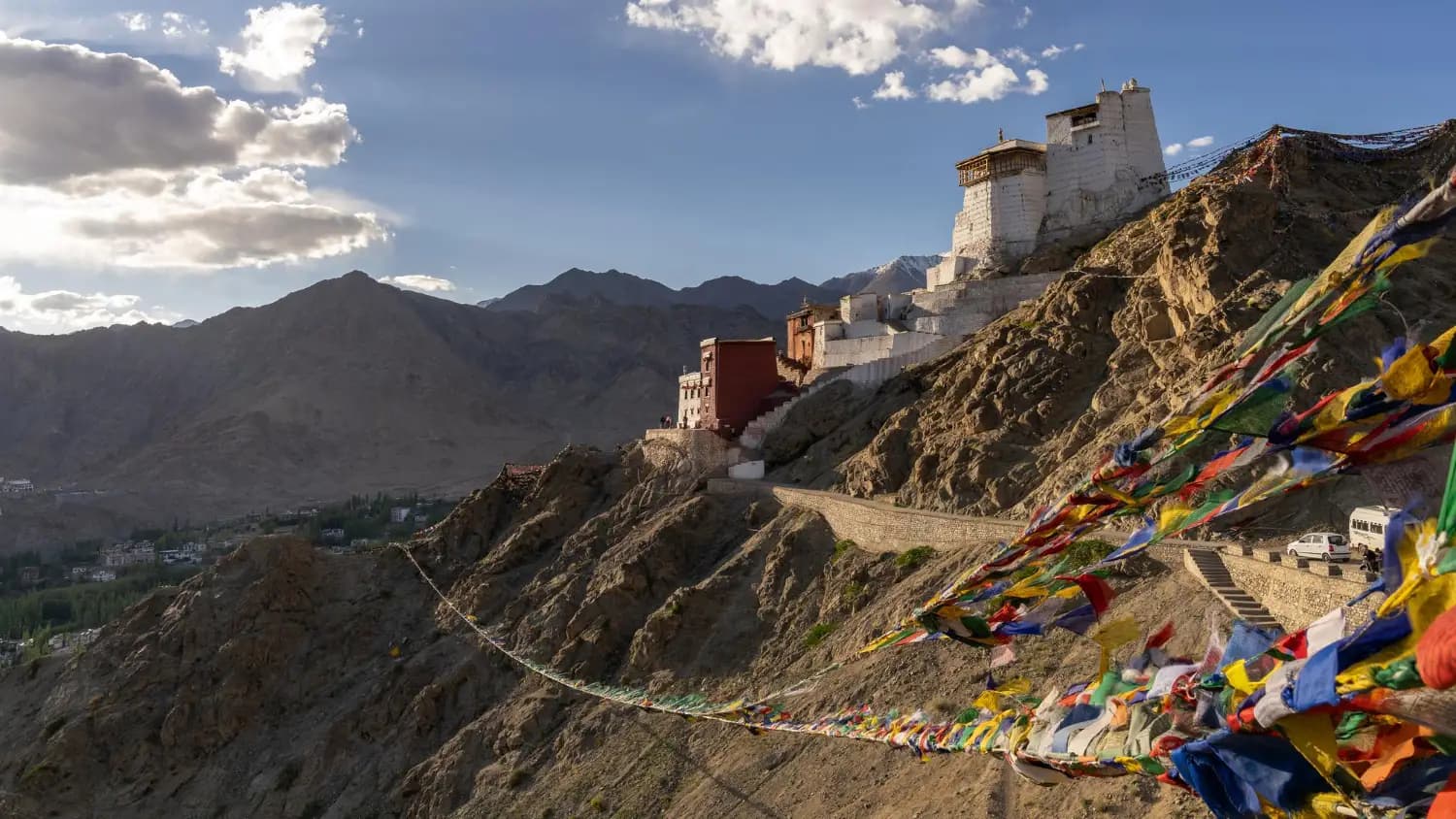
Ladakh is a high-altitude land of stark mountains, turquoise lakes and whitewashed monasteries perched on rocky ridges. Between the Karakoram and the Great Himalaya, it is often called the Land of High Passes, and every journey here involves crossing at least one. From the dunes of Nubra to the shifting blues of Pangong Tso, a Ladakh tour offers some of Asia's most dramatic landscapes.
India’s largest Union Territory by area is also home to a gentle, resilient culture shaped by Tibetan Buddhism and centuries of trade along the old caravan routes to Central Asia. Masked dances at monastery festivals, butter tea in village homes and prayer flags fluttering on every pass make Ladakh tourism as much about people as it is about scenery. Whether you come for road trips, treks, wildlife or quiet monastery visits, Ladakh rewards travellers who take it slowly.
Quick Facts & Information About Leh Ladakh
Region
Union Territory in Northern India
Establishment
31 October 2019 (Ladakh became a separate Union Territory after the reorganisation of the former state of Jammu and Kashmir).
Location
Situated in the Trans-Himalayan region of northern India, Ladakh shares its boundaries with the Union Territory of Jammu and Kashmir, Himachal Pradesh, China and Pakistan-administered territory.
Capital City
Leh is the capital and administrative headquarters.
Area
Approximately 59,146 sq. kms
Major Cities
Leh and Kargil are the two main urban centres. Other important towns and valleys include Nubra, Diskit, Drass, Zanskar, Turtuk and Hanle.
Languages Spoken
Ladakhi (Bhoti), Balti, Purgi, Urdu, Hindi and English.
Climate
Ladakh has a cold desert climate with very little rainfall. Summers are generally short, dry and pleasant during the day. Winters are extremely cold, with heavy snowfall in some areas. Temperatures can drop well below freezing during winter.
Key Attractions
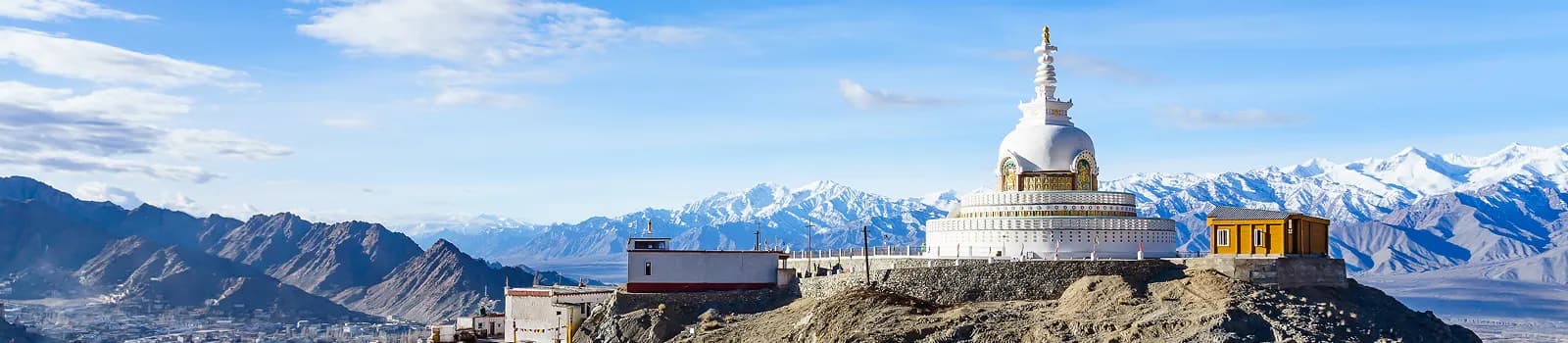
Pangong Tso Lake, Tso Moriri Lake, Nubra Valley, Khardung La Pass, Magnetic Hill, Shanti Stupa, Leh Palace, Thiksey Monastery, Hemis Monastery, Diskit Monastery, Zanskar Valley and Lamayuru Monastery.
Famous Festivals
Hemis Festival, Losar Festival, Dosmoche Festival, Ladakh Festival, Sindhu Darshan Festival, Tak-Tok Festival and Phyang Tsedup.
Cuisine
Thukpa, Skyu, Momos, Mokthuk, Chutagi, Paba, Khambir, Tingmo, Butter Tea (Gur Gur Chai), Chang and Apricot-based dishes.
Unique Experiences
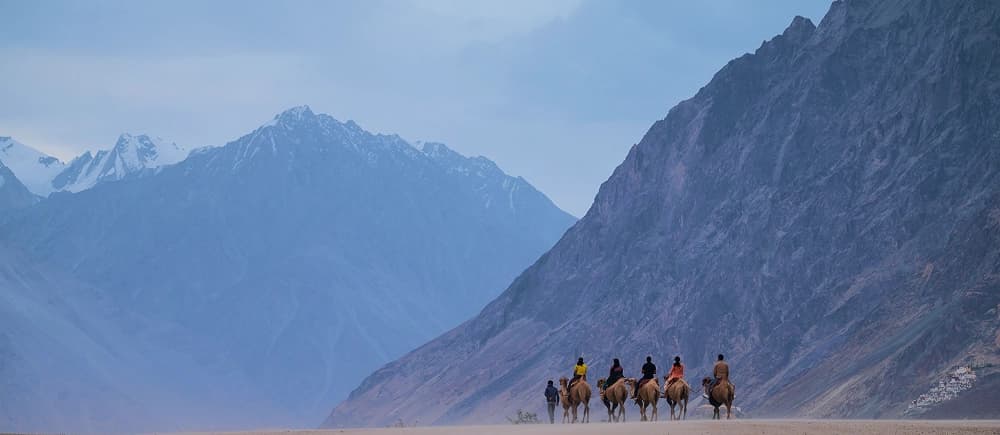
Enjoy scenic mountain drives, admire Pangong Lake, explore Nubra Valley, stay in traditional homestays, visit ancient monasteries, ride Bactrian camels, trek in the Himalayas, taste Ladakhi food and stargaze in Hanle.
Economy
Ladakh's economy depends on tourism, farming, animal husbandry, handicrafts, Pashmina wool, apricot farming and traditional weaving.
Specialty
Renowned as the "Land of High Passes", Visitors know Ladakh for its beautiful mountains, clear lakes, ancient monasteries, peaceful valleys and unique culture.
Top Tourist Places to Visit in Leh Ladakh
Pangong Tso
At around 4,250 m, this long, narrow lake stretches from India into Tibet and changes from deep blue to turquoise and green through the day. Spangmik, Man, and Merak villages offer camps and homestays on its shores. Best time: May to September Entry Fee: No ticket; online environmental fee required for Indian visitors; Protected Area Permit for foreigners
Nubra Valley – The Valley of Flowers and Dunes
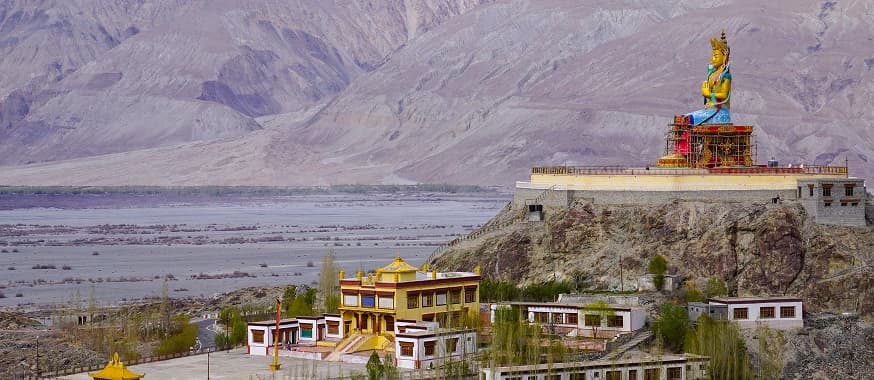
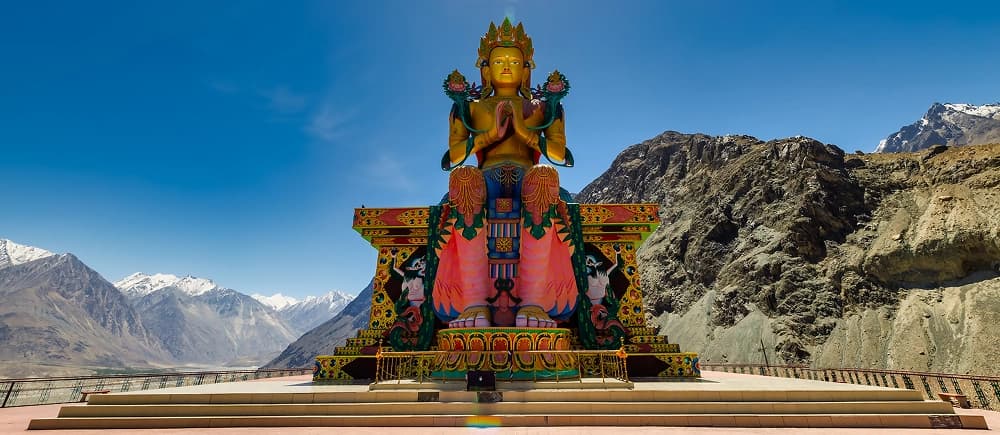
Reached via Khardung La, Nubra is known for the dunes of Hunder, double-humped Bactrian camels, the hilltop Diskit Monastery with its giant Maitreya Buddha, and the Balti village of Turtuk. Best time: May to October Entry Fee: Environment fee/permit required; monastery entry nominal
Tso Moriri – The Quiet High Lake
Set at about 4,500 m in the Changthang region, Tso Moriri is a Ramsar wetland surrounded by snow peaks and home to bar-headed geese and nomadic Changpa herders. The village of Korzok sits on its western shore. Best time: June to September Entry Fee: Environment fee/permit required
Zanskar Valley – Ladakh’s Remote Frontier
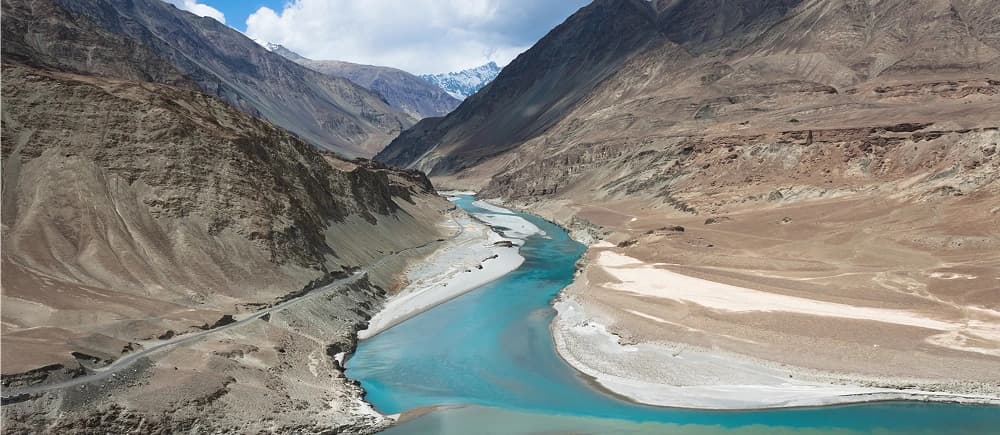
Cut off for much of the winter, Zanskar is a land of deep gorges and ancient monasteries such as Phugtal, built into a cliff face, and Karsha. Padum is the main town, and the valley is famous for the winter Chadar trek on the frozen Zanskar River. Best time: June to September (January to February for the Chadar trek) Entry Fee: No general fee; monastery donations welcome
Kargil and Drass – Valour and Valleys
Kargil lies on the Srinagar–Leh highway and is a base for the Suru Valley. Nearby Drass, one of the coldest inhabited places in India, is home to the Kargil War Memorial, which honours soldiers of the 1999 conflict. Best time: May to October Entry Fee: Free
Popular Tour Packages
Most booked holidays, hand-picked by our travellers