
Pohela Boishakh
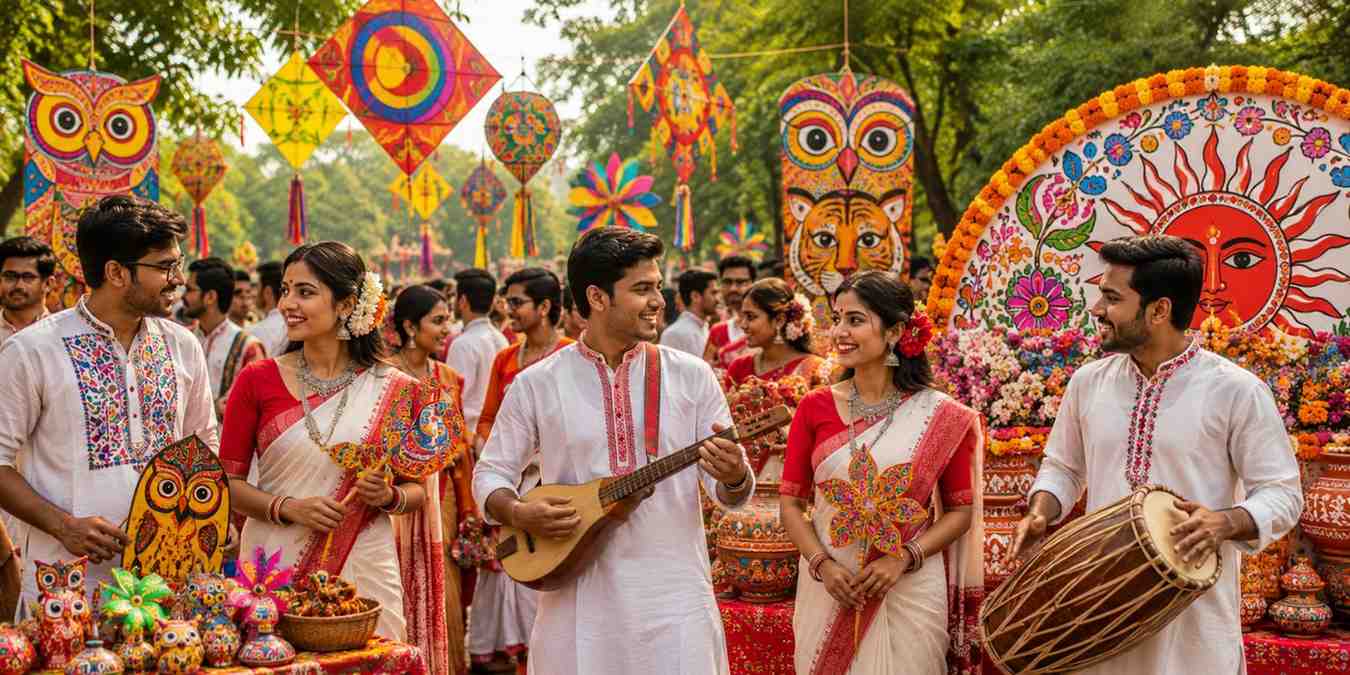
During Pohela Boishakh, tourists are welcomed into a world of joy, tradition, and hospitality. The day starts with people wearing new clothes, offering prayers in temples, wishing for prosperity, and exchanging sweets with friends and relatives. Cultural events featuring Rabindra Sangeet (Rabindranath Tagore's songs), folk dances, and art exhibitions give a glimpse into Bengal's rich art heritage.
For visitors, Pohela Boishakh offers a perfect blend of spiritual significance, cultural richness, and festive joy. It's a good time to experience Bengali hospitality, enjoys traditional cuisine such as shorshe ilish (mustard hilsa fish) and mishti doi (sweet yogurt), and behold the vision of women in classic sarees and men in kurta-pajamas sporting a red tilak on their forehead. From Kolkata's pompous celebrations to folk practices in villages, Pohela Boishakh provides tourists with a distinctive view of Bengal's identity. In short, traveling to West Bengal during Pohela Boishakh offers more than just a festival—it provides a vibrant cultural experience filled with music, rituals, flavours, and the warm hospitality of Bengali traditions.
Specialty of Festival:
Pohela Boishakh celebrates the Bengali New Year with colourful cultural events, ancient rituals, and festive celebrations. The festival is famous for the "Haal Khata" ritual, cultural events, and mouth-watering Bengali food. Pohela Boishakh harmoniously blends spirituality, social bonding, and vibrant cultural expression, making it a truly enriching experience for every visitor.
Month of Festival:
April
How to Reach?
Netaji Subhash Chandra Bose International Airport in Kolkata is well connected with major Indian cities and international places, so air travel is easy and quick.
West Bengal’s extensive railway network, with Kolkata as the central hub, is well-connected to major Indian cities via trains like the Rajdhani and Duronto Express.
West Bengal is well-connected by national highways, making it easily accessible by private vehicles and buses from neighbouring states to key cities like Kolkata, Siliguri, and Durgapur.
FAQs
Popular Tour Packages
Most booked holidays, hand-picked by our travellers