
Kumbh Mela
Prayagraj
Haridwar
Nashik
Ujjain
Prayagraj (previously Allahabad), located at the meeting point of the Ganges, Yamuna, and fabled Sarasvati rivers; Haridwar, situated on the banks of the Ganges in Uttarakhand; Nashik, situated on the banks of the Godavari River in Maharashtra; and Ujjain, situated on the banks of the Shipra River in Madhya Pradesh. Furthermore, Prayagraj and Haridwar host the Ardha Kumbh Mela every six years.
Hindu mythology, which relates the tale of the gods and demons churning the ocean to extract the nectar of immortality, is the source of the Kumbh Mela. Drops of nectar fell at the four sacred sites where the Kumbh Mela is currently celebrated during the churning. According to Hindu astrology, the Kumbh Mela usually lasts for a few weeks to a few months, depending on the location and fortunate planetary alignments. The biggest crowds are drawn to the main bathing days, also called Shahi Snan or Royal Baths, which are thought to be the most fortunate times to take a bath.
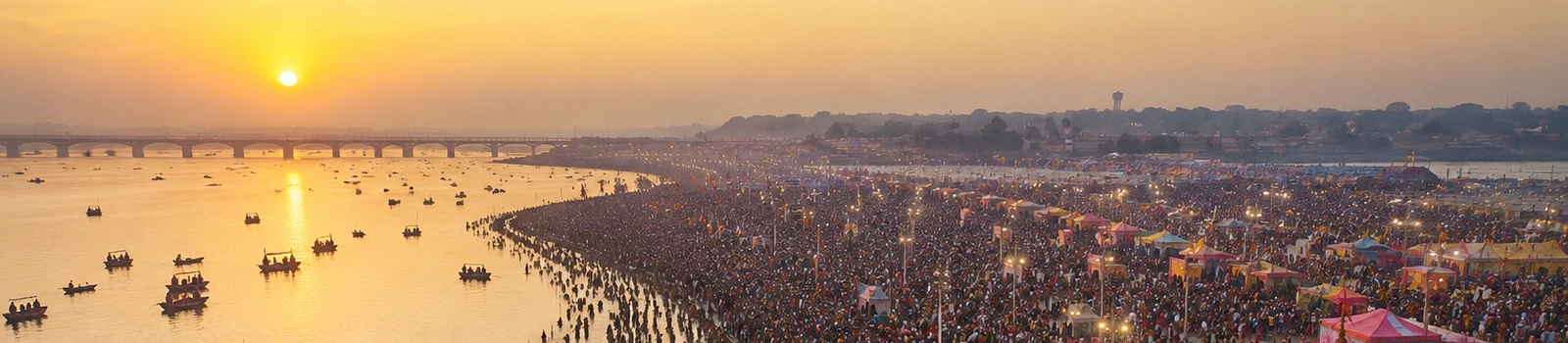
Bathing in the sacred river at the Kumbh Mela is the main event, as it is thought to wash away sins and purify the soul. Additionally, devotees take part in cultural activities, talks by spiritual leaders, religious ceremonies, and prayers. At the Kumbh Mela, ascetics, sadhus, and saints from different Hindu sects congregate, heightening the spiritual atmosphere.
Beyond its religious significance, the Kumbh Mela is a cultural extravaganza that highlights India's diverse past and customs. Witnessing and experiencing the rich tapestry of Indian culture is made possible by its attraction to tourists and journalists from around the globe. In summary, the Kumbh Mela is an immense assembly of spirituality, faith, and devotion that is profoundly woven into India's religious and cultural fabric. It represents tolerance, harmony, and the never-ending pursuit of knowledge.
Specialty of Festival:
With millions of devotees assembling for ritual bathing and spiritual activities, the Kumbh Mela is the largest religious event on earth, drawing pilgrims from all over the world. It is also considered to have great spiritual significance in Hinduism, with bathing in the scared rivers during the mela clearing one's soul of sins and assisting in achieving moksha. Its celebration and close ties to its religious origins are what make the Kumbh fair special. It is at this time that Hinduism is revealed to the universe in all its splendour. These distinctive qualities add to the Kumbh Mela's remarkable aura and significance, making it an event that is genuinely unmatched in the world of religious and cultural gatherings.
Month of Festival:
The winter season, usually from January to March, is when the Kumbh Mela in Prayagraj usually occurs.
How to Reach?
Allahabad Airport, about 12 km from the city centre (Prayagraj).
Prayagraj Junction.
National highways.

Spiritual Purification
Bathing is thought to wash away sins and purify the soul.
Largest Religious Assembly
The world's largest religious event.
FAQs
Popular Tour Packages
Most booked holidays, hand-picked by our travellers