
Dasara Navarathiri
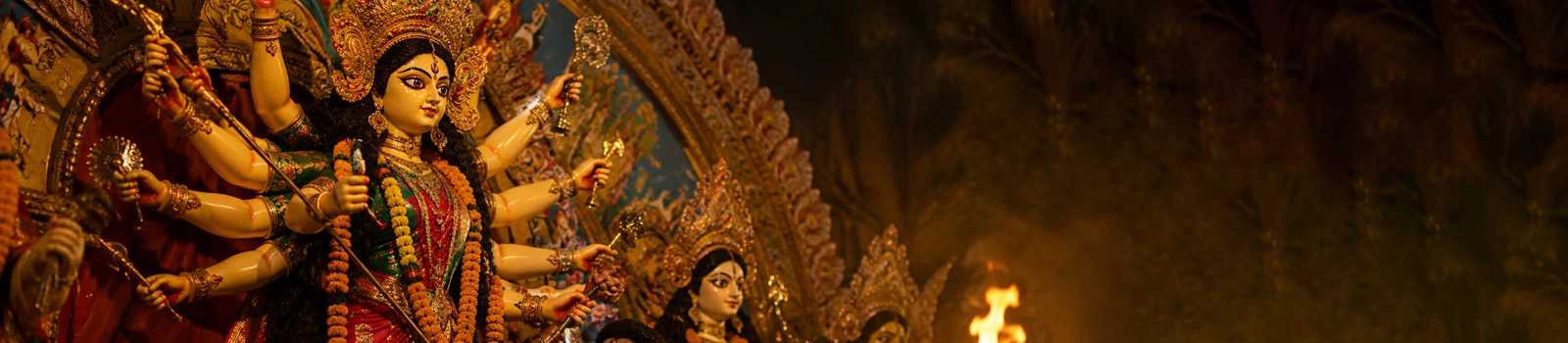
Navratri has been celebrated to worship the Goddess of Power, Durga, in nine different forms. There are actually four Navratris celebrated in a year namely Magha Navrathri during January - February, Vasantha Navrathri during March - April, Ashada Navratri during June - July and Saradha Navratri during September - October.
In India, the most famous and celebrated in a pomp manner is the Saradha Navrathri. Saradha means autumn and this is a post monsoon autumn festival. This year Sarada Navratri is celebrated between 21st September and 29th September 2017. The exact dates may vary in every year based on Luni - Solar calender.
In Eastern and North Eastern India, Navratri is celebrate to commemorate the Victory of Goddess Durga fighting with the Buffalo Demon and reinstate Dharma, the right way of living. In South India, Navrathri is mainly focusing on worshipping the different forms the Goddess Durga. Ramayanam and Devi Mahathmiyam are the mainly recited epics during this festival.
The decorations in every house celebrating Navrathri will be very exquisite. Theme based decorations are the order of the day. Odd numbered stairs ranging from three to eleven will be there on which the idols are decoratively placed. The lowermost is for the small insects and in every step up, different animals are placed. Just before the last step, figurines of human beings are kept and at the topmost step, idols of gods are placed.
The great philosophy behind this arrangement is that man undergoes several births right from a small insect to different animals. Born as a human being itself is a great boon. So, when a human being leads a pious life, he will attain the feet of the God and will be relieved from the cyclic births and deaths.
For eight days, different offerings will be prepared and friends and relatives will be visiting to the houses to see the decorations called “Kolu”. Little girls beautifully dressed up will be performing dance and other arts. It is otherwise a reunion of friends and families in today’s busy life style.
On the ninth day,the keep their belongings like books, weapons and the like in front of God and do special poojas. Only on the tenth day they can take everything back for usage. The ninth day is called “Ayudha Pooja” and tenth day is called “Vijaya Dasami” where Vijaya means victory. Performing the rituals on all the nine days will bring victory in one’s life.
Ultimately, the purpose of this birth is to get salvation on the Judgement Day. Celebrating Navratri is one of the methods in Hindu Philosophy for a peaceful life and to attain God’s feet.

Spiritual Significance
Rituals for victory and peace.
Cultural Experience
Traditional decorations and symbolism.
Family Reunion
An occasion for gathering.
Popular Tour Packages
Most booked holidays, hand-picked by our travellers