





No.4, Annai Avenue, Vasanth Nagar EXTN,
Srirangam, Trichy, Tamil Nadu ,620006.
CIN: U31100TN2010PTC078389
DUNS Number: 859496557

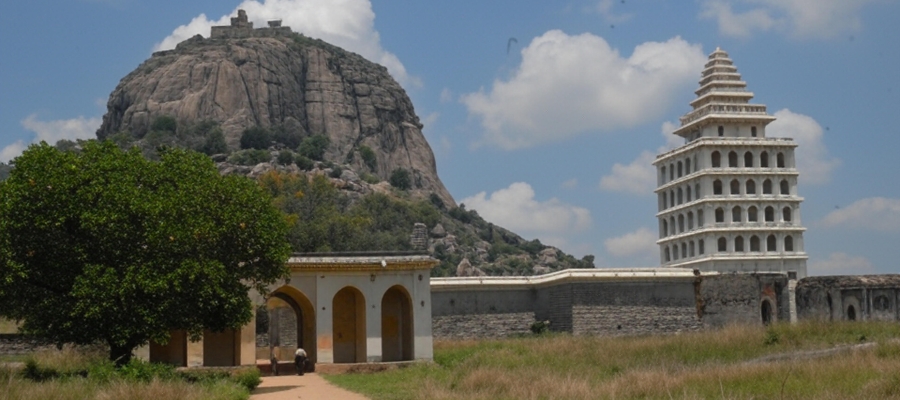
When you think of majestic Indian forts, Rajasthan or Maharashtra are the first places that usually come to mind. But nestled in the peaceful rural landscape of the Viluppuram district in Tamil Nadu, India, is one of the country's most fascinating and impenetrable fortresses – Gingee Fort. Once the Troy of the East for the British, this fort is now not only a relic of vintage military strategies but a living testimony to the dynasties that dominated the history of South India.
In July 2025, the Maratha Military Landscapes of India (Gingee fort) was added to the UNESCO World Heritage List, further emphasizing the international acclaim of India's military architecture and heritage.
If you are a heritage lover, a photographer, or simply a curious traveller, Gingee Fort deserves a top spot on your travel list. With its sprawling hilltops, ancient temples, and sweeping countryside views, this fort offers a mix of history, adventure, and serenity that few destinations can match.
The history of Gingee Fort dates back to the 9th century during the Chola dynasty. It was enlarged and fortified by the Vijayanagar rulers in the 15th century. The fort's strategic location made it highly desirable, resulting in its frequent change of control among the Marathas, Mughals, French, and British.
Every dynasty left its mark, making Gingee a fortress of tales. The Maratha king Shivaji was particularly interested in its defence mechanisms, and the Mughal emperor Aurangzeb referred to it as one of the most difficult forts to conquer in South India. Even the British, known for their military strength, found Gingee to be intimidating and referred to it as the Troy of the East.
Walking among its ruins today is akin to leafing through the pages of history, with each stone telling stories of war, rulers, and resilience.
Unlike most one-structured forts of India, Gingee spans three huge hilltops – Rajagiri, Krishnagiri, and Chandrayandurg. This unique layout made it nearly impossible for enemies to invade.
.jpg)
Rajagiri Hill: The most frequented section of Gingee Fort and also the most challenging climb. Along the way, you will find the Kamalakanni Amman Temple, a sacred shrine still revered by the locals, and the Elephant Tank, a water tank that once supported elephants and soldiers in sieges. The Kalyana Mahal is a striking Indo-Islamic tower that once served as a royal wedding hall. The fort includes granaries, a prison, audience halls, and water reservoirs, highlighting its self-sustaining design.
Krishnagiri Hill offers a shorter trek than Rajagiri, with beautiful views of the plains and nearby villages. The highest point was once used to monitor approaching enemies.
Chandrayandurg Hill: Quieter and less crowded, this hill is perfect for those who want to see the fort without large crowds. The massive stone fort walls, bastions, and gateways are architectural wonders.
There are Indian forts that amaze you with their grandeur, and others like Gingee that stun you with their scale and strategy. Here’s why travelers find it unforgettable:
At Gingee Fort, sightseeing offers more than just views – it’s an immersive experience. Here’s what you can do:
If you are planning an extended trip, you can connect Gingee Fort with several nearby destinations.
These bring diversity to your trip – from spirituality to beach holidays.
To optimize your visit, the following are some helpful tips:
Gingee Fort is one of those places that surprises you. When you see it from a distance, it appears to be a series of rocky hills, but as you move towards it, the enormity of the fort bursts out in grandeur. Its ruins are centuries old, yet grandeur is still alive. Unlike crowded monuments, Gingee Fort provides ample space to explore and reflect on history. For those traveling through Tamil Nadu, it is more than a stop - a nostalgic journey that delights the spirit and tells a story etched in stone.
At Indian Panorama, we believe that travel is not only about visiting places but also about experiencing their essence. Gingee Fort, with its blend of history and adventure, is a gem in our Tamil Nadu heritage tours.
Want to explore the architectural marvels of Tamil Nadu? Check out our exclusive Tamil Nadu tours with Indian Panorama.
If you are looking for a personalized tour encompassing forts, temples, and cultural experiences, or an in-depth South India tour, we are here to make it seamless. Step back into the past, shoot the present, and make memories to last a lifetime at Gingee Fort with us.
No FAQ available for this Blog.

Share This News