



No.4, Annai Avenue, Vasanth Nagar EXTN,
Srirangam, Trichy, Tamil Nadu ,620006.
CIN: U31100TN2010PTC078389
DUNS Number: 859496557

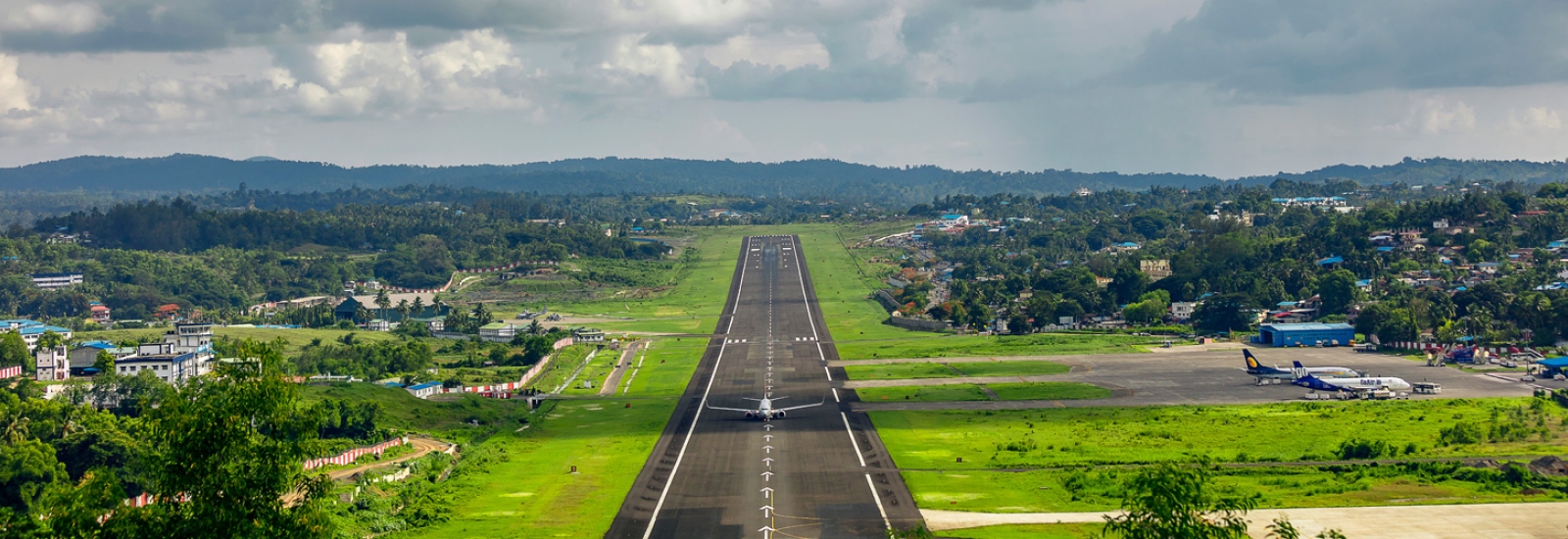
India is rapidly becoming as a top hub for world-class aviation, with airports that are not just transit points but architectural wonders in their own right. These airports meld functionality with artistic creativity, blending advanced technology, sustainable practices, and regional cultural elements to present a unique experience to the travelers.
From towering ceilings and spacious glass façades to the alluring indoor gardens and meticulously curated art installations, airports in India now reshape the perspective how we perceive air travel. Each terminal is designed to captivate at first sight while offering comfort, user-friendliness and efficiency. Whether it’s the grandeur of a largest international terminal or the compact spaces of a regional airport, these hubs offer more than merely travel—they mirror the country’s advanced spirit and rich heritage.
Travelers journeying through these airports don’t just move from point A to point B; they experience a hassle-free integration of design, culture, and hospitality, leaving an enduring impression even before reaching their destination. With every innovative project, India endures to push the limits of airport design, establishing itself as a global leader in melding aesthetic excellence with operational brilliance.

Airports in India are progressively recognized on the global stage for their exceptional ability to blend contemporary architecture, cultural richness, and passenger-oriented design. Many factors contribute to their distinction:
These collective features make airports in India not only visually stunning but also functional and traveler-friendly, setting benchmarks for international standards when it comes to airport design.
The first International airport in India the Indira Gandhi International Airport is located at the Capital city of India, Delhi. It is the busiest airport in India with catering to more than 60 million air passengers. The terminal no.9 with 2 piers each 1.2 km long is the sixth largest of its kind in the world. This airport features modern facilities, efficient baggage systems, and multiple lounges, assuring a smooth passenger flow.
Spanning across 1450 acres, the Mumbai Chattrapathi Shivaji International Airport is one of the most beautifully built airports in India. Located in Maharashtra, it is second busiest airport in India. The Chattrapathi Shivaji International Airport handles 30 million passengers a year. It is the Second busiest airport in India, handling around 30 million passengers per year. This airport is equipped with luxurious lounges, retail zones, and modern terminals that provide a world-class travel experience. Its strategic location makes it the primary gateway to western India and a center for international travel.
Opened in May 2008, the new Bangalore Airport is an eye candy. The design of this airport features a striking and modern architectural style. This massive structure was constructed by a private company and the design is fabulous. Being the third busiest airport in India, it handles over 20 million passengers and 1, 00, 000 aircraft movements a year. Renowned for its spacious terminals, art installations, and passenger-friendly design, this airport also highlights efficient infrastructure that allows seamless handling of both domestic and international flights.
It is ne among the major gateways to India and the primary gateway to South India for people around the world. It is one of the oldest international airports in India. The Chennai Anna International Airport operates 117,418 aircraft movements in India and more than 12 million passengers pass through the Chennai airport every year.
Spread over 1670 acres, the Netaji Subhash Chandra Bose International Airport caters to more than 10 million passengers a year. It was previously known as the Dum Dum Airport. Spanning over an area of 1000 hectares, the Kolkata Airport is the major hub for air traffic in the North East India. It has a capacity of handling 25million passengers a year.
One of the best airports in India with most modern facilities, the Hyderabad International Airport is operated by a private company. More than 7 million passengers rely on Hyderabad airport for their air movements which reveals that is the largest airport in India. With its well-structured infrastructure, its can control a massive crowd with ease. Renowned for its effective crowd management, expansive terminals, and technological innovations. This airport offers luxurious lounges, retail areas, and food courts, presenting a world-class experience.
The Goa International Airport is also known as the Dabolim Airport. It is the 9th biggest airport in India. It handles around 7 million passengers, 700 international flights and 30,000 air movements every year. Goa International Airport acts as a gateway to India’s beach tourism, making it a major airport for domestic and international leisure travelers.
India’s next-generation airports are ready to transform travel experiences by adopting sustainability, innovative technology, and immersive design. Future projects are expected to feature:

Share This News