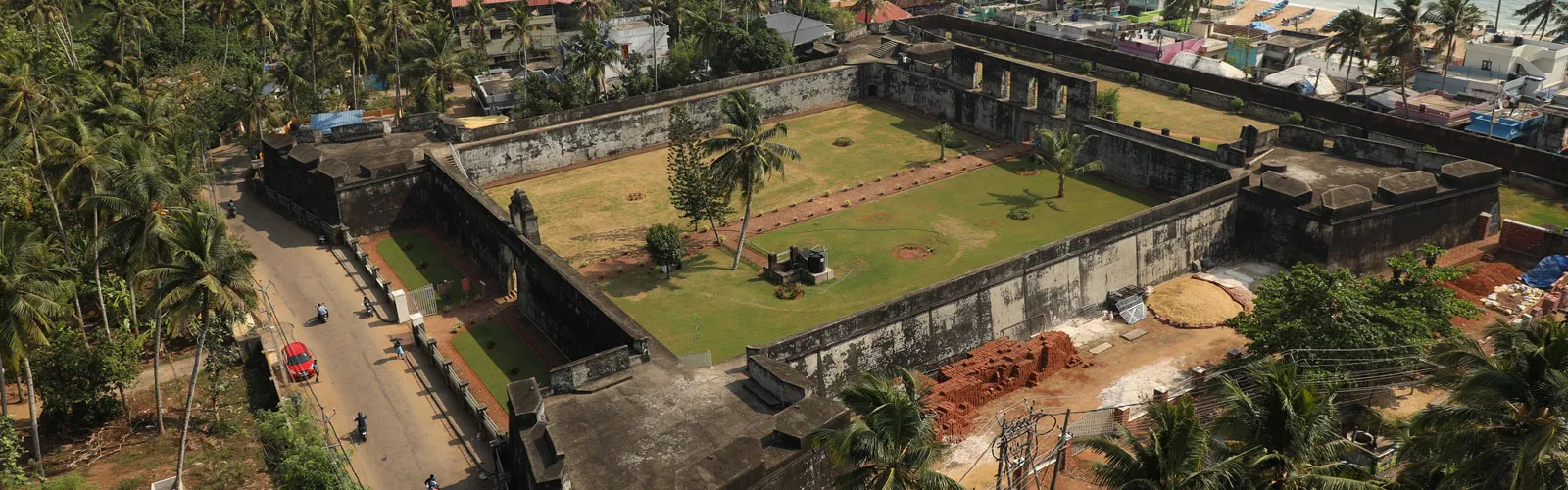
About Anjuthengu Fort
Built in 1695 by the British East India Company after receiving permission from the Queen of Attingal, Anjuthengu Fort (also called Anjengo Fort) became the company’s first trade settlement in Kerala. Strategically located between the Arabian Sea and backwaters near Varkala, it served as a pepper trading hub, signalling station for ships from England, and ammunition store during the Anglo-Mysore Wars against Hyder Ali. The 1721 Attingal Rebellion marked one of the earliest collective uprisings against British rule. With four bastions, mounted guns, and a colonial cemetery, it remains a must-see in any Anjuthengu Fort travel guide.
What to Expect?
When you arrive at Anjuthengu Fort, expect a serene step back into the late 17th century. Unlike the sprawling hill forts of the north, this is a compact, square-shaped maritime fortress built with distinct laterite slabs and lime mortar. As you walk through the east or west gates, the first thing you’ll notice is the striking contrast between the dark, weathered walls and the vibrant, manicured green lawns of the central courtyard. The ambiance is incredibly tranquil, far removed from the typical tourist hustle. You can spend about an hour exploring the four robust bastions, which still house old cannons that once guarded the British East India Company’s pepper trade.
One of the most rewarding things to do at Anjuthengu Fort is to climb the ramparts for a panoramic view of the Arabian Sea. From this vantage point, the silhouette of the coconut groves—the legendary "five trees" that gave the town its name—stretches out toward the horizon. For photography enthusiasts, the play of light against the colonial architecture is a dream, especially during the golden hour. Just a few meters away, the towering Anjengo Lighthouse offers an even higher perspective of the coast and the nearby backwaters.
While exploring, keep an eye out for the historic cemetery, where the oldest tomb dates back to 1704, offering a poignant glimpse into the lives of early European settlers. If you’re looking for a relaxed outing, the adjacent beach and the nearby Muthalapuzhi Lake are perfect places to visit in Anjuthengu Fort for a quiet picnic. To ensure the most pleasant experience, a top Anjuthengu Fort travel guide tip is to visit between 3:00 PM and 5:00 PM, allowing you to combine your fort exploration with a climb up the lighthouse before enjoying a spectacular sunset on the golden sands of the beach.
Best Time To Visit Anjuthengu Fort
The absolute best time to visit Anjuthengu Fort is during the winter months, specifically from October to March. During this peak season, the weather is exceptionally pleasant, with temperatures comfortably resting between 21°C and 24°C. The humidity, which can be quite intense in Kerala, is at its lowest, and the clear blue skies provide a stunning backdrop for the laterite stone walls and the surrounding Arabian Sea.
One of the most essential Anjuthengu Fort travel tips is to schedule your arrival for mid-afternoon, around 3:00 PM. This allows you to explore the cool, shaded interior of the fort first, avoiding the midday sun. Visiting during this window also ensures you can climb the adjacent Anjengo lighthouse, which typically opens to the public between 3:00 PM and 5:00 PM. As the day ends, you can witness a breathtaking sunset from the fort’s bastions, a highlight for any Anjuthengu Fort travel guide.
If you visit between April and June, be prepared for significant heat and humidity, with temperatures sometimes reaching 42°C. While the fort remains a peaceful retreat, the sun can be quite draining for outdoor sightseeing. Alternatively, the monsoon season from July to September offers a different kind of beauty; the region turns a vibrant emerald green, though heavy rains might limit your time on the ramparts.
For those interested in local culture, the months of December through April often coincide with various temple festivals in the Thiruvananthapuram district, adding a layer of traditional music and colour to your trip. No matter when you go, this quiet fortress remains one of the most historically significant places to visit in Anjuthengu Fort, standing as a silent sentinel over the Kerala coast.
How To Reach Anjuthengu Fort?
By Air:Thiruvananthapuram International Airport, about 28.5 Km away, is the closest airport, with convenient cab services to the fort.
By Train:The nearest major railhead is Varkala Railway Station, around 12 Km away. Local taxis and auto-rickshaws are easily available.
By Road:Anjuthengu Fort is about 30-35 Km from Thiruvananthapuram via NH66, roughly a one-hour drive. It is well connected by taxis and Kerala State buses from Varkala (12 Km) and Attingal (11 Km bus stand).
Nearby Tourist Spots
- Anjengo Lighthouse: A 130-ft operational lighthouse offering sweeping Arabian Sea views, especially magical at sunset.
- Varkala Papanasam Beach: Famous for its spiritual significance and red cliffs. A dip here is believed to wash away sins.
- Kappil Beach: Scenic coastline where backwaters meet the sea, ideal for boating and tranquil walks.
- Thiruvambady Beach: Also called Black Sand Beach, perfect for quiet relaxation.
- Sivagiri Mutt: A major pilgrimage site and the final resting place of the revered social reformer Sree Narayana Guru.
- Janardanaswamy Temple: A 2000-year-old ancient Vishnu temple known for sacred rites and great architecture.
- Ponnumthuruthu Island: This serene island in Anjengo Lake is home to a historic Shiva-Parvathi temple and is a haven for birdwatchers.
Tips for Visiting Anjuthengu Fort
- Timing & Entry: The fort is open daily from 9 AM to 5 PM. Entry is free!
- Pair Your Visit: Time your arrival for the afternoon so you can also visit the Anjengo Lighthouse (open 3:00 PM – 5:00 PM).
- What to Wear: Wear sturdy walking shoes and bring a hat and sunscreen to beat the tropical heat.
- Photography: Carry a camera; the bastions offer the best panoramic shots of the Arabian Sea.
- Stay Hydrated: Keep a water bottle handy as there are a few shops inside.
- Respect the Site: As a place of historical importance, help preserve its beauty by avoiding littering and following posted guidelines.
- Connect with Locals: Interact with local residents to discover fascinating stories and cultural insights about the fort’s past you won’t find in guidebooks.
FAQ:
Kerala Destinations
View all


Kerala Tour Packages
View all


Kerala Tourist Attraction
View all


Kerala Temples
View all


Kerala Festivals
View all


Kerala Museum
View all
Kerala Forts
View all
Kerala Birds Sanctuary
View all
Kerala Caves
View all