... in South India

The dominant natural feature of Southern India
is the Western Ghats. This monumental mountain chain stretches from
inland of Mumbai to the southern part of Kerala, with the great rivers
of the south east emerging to flow through Tamil Nadu and Karnataka,
both of which have a lot of territory in these hills. Once thickly
forested over their entire length and breadth, a proportion of the
Ghats are now rich agricultural land, with spices, tea, coffee, vegetables
and more are grown. Rich soils and perfect climatic conditions make
the Ghats one of the greatest areas of biodiversity in Asia.
There are many accommodation options in the
Ghats ranging from simple jungle camps to fully equipped tree houses
and luxury resorts. The services of a resident naturalist are available
at many places and your trip will certainly be more informative if
you are accompanied by a knowledgeable local. The diversity of animal
species in the Ghats is staggering. The area is home to elephant,
tiger, leopard and bear. While populations of these iconic species
are healthy, the dense undergrowth and extensive territory makes sightings
more a matter of luck than anything else. This is perhaps what makes
a sighting such a thrill. In most areas sightings ofvarious species
of deer, monkeys and small mammals such as squirrels and mongooses
are very common. Bird life is also abundant making the Ghats a bird
watchers paradise. The quality and range of activities within the
various parks varies greatly depending on whether they are under Government
control or privately operated.
In the area where the three southern states-
Tamil Nadu, Karnataka and Kerala- meet, three great National Parks
adjoin one another, creating a massive area of tropical wilderness
with a rich variety of flora and fauna. Mudamalai, Wayanad and Bandipur
are the three parks.

Nagarhole Sanctuary in Karnataka is 85 km from
Mysore. This park is perhaps the finest in south India and is home
to large populations of all the major mammal species including a number
of tigers. With an extended stay, visitors have good chance of a close
up view of this most majestic of big cats. Accommodation is available
at Kabini River Lodge, King's Sanctuary and Jungle Inn. The tariff
at these places includes all jungle activities.
Bandipur is also in Karnataka, around 100km
from Mysore. It is particularly famous for its elephant population,
but is part of Project Tiger as well. The BR Hills Tented Camp is
set amidst an area of diverse vegetation with open forests which lend
themselves to excellent wildlife viewing. In all the locations, morning
and evening jeep safaris into the respective sanctuaries are accompanied
by a naturalist who will explain the local flora and fauna.
Wayanad is a less visited natural region of
the south. The Kerala section of the massive park mentioned above,
this area provides many opportunities for trekking. The vegetation
is different again, with patches of rain forest and bamboo forest.
As this area has been more recently opened for tourism, wildlife viewing
facilities are less developed, but equally the number of human visitors
is lower. The Eddakkal Caves near Wayanad are a remarkably well preserved
example of 10000 year old rock carvings set high in the Western Ghats
and can be reached by a drive through scenic countryside and a shot
climb up a well defined path.
The Tamil Nadu section of this massive reserve
is Mudamalai National Park. The two major activities in this park
are short elephant rides and van trips into the park. Elephant numbers
are healthy here too, as well as deer, peacocks, leopards, hornbills
and many more. As this park is close to Ooty, there are many local
day trippers who come here making a true wilderness experience rather
unlikely. Very close to Mudamalai is the private reserve of Wild Canopy
where visitors may stay in wonderfully constructed tree houses 15
metres above the forest floor. This is a rare opportunity to stay
in the forest itself with animals passing beneath your accommodation
to drink at nearby waterholes.

The Nilgiri Hills area was a favourite of the
British during colonial times and the hill station towns of Ooty and
Coonoor are popular holiday spots to this day. Away from the towns,
a variety of opportunities exist for tribal visits, short and long
treks, tea plantation tours, and drives to some spectacular viewpoints.
This region is a bird watcher's paradise with a variety of habitats
leading to a great diversity of species.
Munnar, also formerly a British hill station,
is set at an altitude of 6000ft amidst an area of breathtaking beauty;
a haven of peace and tranquillity, Munnar is one of the most idyllic
tourist destinations in Kerala. Long vistas to tea plantations, pristine
valleys and mountains, exotic species of flora and fauna in its wild
sanctuaries and forests, Munnar has all these and more. The nearby
Eravikulam National Park is the last refuge of the endangered Nilgiri
Thar, a mountain goat endemic to the Western Ghats. Also close by
is Raja Malai, highest peak in the area and a prime region for trekking.
Periyar (Thekkady), one of the first areas of
the Ghats to be opened to tourism, is popular with locals and visitors
alike. The Periyar wild Life Sanctuary with its unsullied grasslands
and "Blue Mountains" is home to scores of species of wildlife including
elephants, tigers, leopards, deer and birds of all kinds. This is
one of the most important National Parks in India. The sanctuary is
spread across 777 sq km, of which much is thick evergreen forest.
The splendid artificial Periyar Lake adds to the charm of the park.
This is the only sanctuary in India where you can view wildlife from
a boat on the lake. There is a well organised eco-tourism department
here- a government initiative in co-operation with local tribal people
and rehabilitated poachers- which operates such activities as bullock
cart rides through the villages, small group guided treks and overnight
camping in the park. Situated on the fringes of the park, the Periyar
Reserve Bungalow is a private homestead offering good sightings from
your balcony and three jeep safaris each day.

Trekking is not a highly developed activity
in south India. Short walks and day treks are available in many of
these places- if you are interested in longer treks with overnight
camping please contact us for more information.
|
|
... in Central and North India

Keoladeo Ghana National Park near Bharatpur
(65km from Agra) is home to the greatest diversity of bird species
in Asia and a major stopping point for migratory birds from northern
Asia during the winter months of October to February. Here you can
see a variety of herons, storks, cranes, ibis, and countless wading
birds. Being only a few kilometres from the town, it is easy to make
more than one visit to the park during your stay. The best way to
explore the park is by cycle rickshaw and many of the drivers are
very knowledgeable about the birdlife here.

Ranthambhore National Park is around 120km from
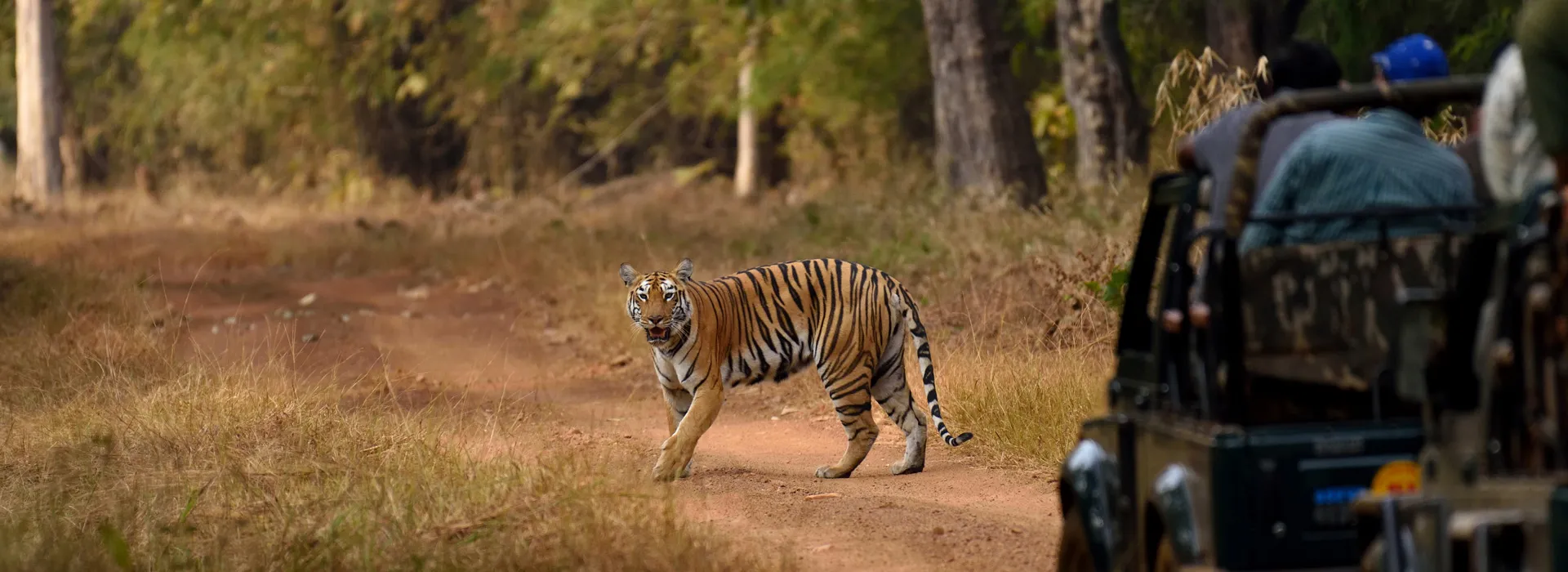
Jaipur. This famous park is home to tigers, with well organised jeep
safaris giving you the maximum chance of seeing these magnificent
animals in the wild. Open grassland is the predominant vegetation
here, enabling visitors to view an array of other species too including
bears, leopards, and various deer species.

Corbett Tiger Reserve was established in 1936
as India's first National Park. It is famous for its wide variety
of wildlife and its beautiful location in the foothills of the Himalaya
by the Ramganga River. It covers an area of 1318 sq km. The diversity
of wildlife here is spectacular with elephant and langur monkeys being
common.
More unusual animals include rhesus macaques, hog deer, barking
deer and several types of crocodiles. The park is closed from mid
June to mid November due to the monsoon.

To reach the prime tiger spotting region of
India- Bandhavgarh and Kanha National Parks in Madhya Pradesh state-
requires significant travel by plane, train and road. The effort is
worth it however as these two parks offer virtually guaranteed tiger
sightings. Visits to these parks include jeep safaris and elephant
rides as alternate ways to explore the environment.
Aside from tiger,
these parks are also home to nilgai, wild boar, jackal, gaur, sambar
deer and porcupine. The birdlife is also varied with larger birds
such as vultures being present.
 
Climatic conditions play a role in determining
the best time to visit any of these parks. During the monsoon conditions
may hamper travel within the parks. Immediately after the rains undergrowth
is lush and thick which may make sightings more difficult. The best
time to visit and have a good chance of spotting wildlife is from
February to May. For more information on India's climate see the FAQ
page.

Camel Trekking For visitors to Rajasthan the
most authentic way to see the desert landscapes of this vast state
is from the back of a camel. From a short trek of a few hours to multi
day epics with nights under the stars, a camel trek will be a highlight
for many visitors to the north. The treks can be arranged from Jaisalmer
and Pushkar.

|